A scientific study evaluates
Hapo FRONT

in laparoscopic surgery

A scientific study evaluates Hapo FRONT in laparoscopic surgery

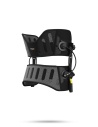
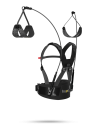
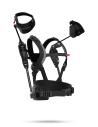
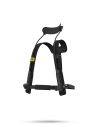
A study published in August 2026 in the scientific journal Ergonomics examined the use of passive exoskeletons to assist healthcare professionals during laparoscopic surgery (also known as coelioscopy, a surgical technique that allows access to the interior of the abdomen via small incisions in the abdominal wall). In particular, the researchers evaluated Hapo FRONT, a flexible exoskeleton designed to support the upper limbs.

A study focusing on muscle activity in the shoulders

During laparoscopic surgery, holding instruments for prolonged periods can place strain on the shoulders. To replicate these stresses, 27 participants performed a simulated task in different arm positions, both with and without an exoskeleton. Their muscle activity was measured using electromyography (EMG). Perceived exertion and levels of acceptance were also recorded.

The study compares two technologies: the Hapo FRONT, which has a flexible design, and the Paexo Shoulder, which has a rigid structure.

What do the results for Hapo FRONT show?

Researchers observed a significant reduction in the activity of the anterior deltoid muscle with the Hapo FRONT, consistently across the various postures assessed.

The result is also significant for the medial deltoid in 4 of the 5 positions studied. Depending on the posture, the relative reductions measured range from 27 per cent to 60 per cent compared with the condition without the exoskeleton.

The study thus highlights two different assistance profiles: Hapo FRONT provides more consistent support across the representative laparoscopic postures studied, whilst Paexo primarily reduces activity in the anterior deltoid when the shoulder is raised higher. Both exoskeleton models demonstrated a reduction in perceived effort and a high acceptance score.

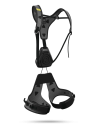
Diagram explaining how the Hapo FRONT works
A spine surgeon in the operating theatre equipped with the Hapo FRONT

The limitations of the study

These results are encouraging, but their implications must be properly understood. The study was carried out in a laboratory setting, with non-surgical participants and involving short-duration tasks. It therefore primarily measures a biomechanical effect and does not directly demonstrate a reduction in musculoskeletal disorders or pain.

The authors now recommend that these exoskeletons be studied during actual surgical procedures and over longer periods.

And in real-world conditions?

This study provides biomechanical data obtained in the laboratory. In addition, several surgeons are already using the Hapo FRONT during their operations and are sharing their feedback on its integration into the operating theatre, its use and the support it provides during operations.

Read their testimonials and find out how the HAPO FRONT is used in surgery.

Contact one of our experts

Our teams are on hand to assess your needs and organise real-world trials so that your staff can experience the benefits of exoskeletons in their working environment.

Contact one of our experts

Our teams are on hand to assess your needs and organise real-world trials so that your staff can experience the benefits of exoskeletons in their working environment.