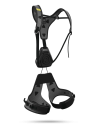
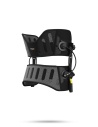
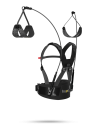
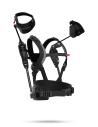
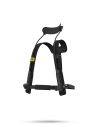
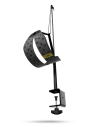
A Hapo exoskeleton is a non-motorized (or "passive") physical assistance device designed to facilitate physically demanding jobs.
Here are its main features and uses:
Objective:
Relieve physical constraints related to repetitive or strenuous tasks (handling, working in a bent position, arms in the air, etc.) by redistributing some of the loads borne by the body to more robust areas (such as the thighs) or by absorbing these loads through mechanical components (springs, composite rods).
Types of models:
- Hapo UP: For shoulders and arms, reduces up to 40% of shoulder muscle strain during "arms in the air" work.
- Hapo FRONT: Supports arms and shoulders, ideal for jobs requiring prolonged "arms in front" movements.
- Hapo SD: For the back, offers lumbar support during bending or squatting work.
- Hapo BACK: Specifically designed for the lower back, it accompanies bending movements and reduces lumbar fatigue.
- Hapo CS: Designed for female body types, relieves the back.
- Hapo NECK: Designed to relieve the neck during "head up" tasks.
Advantages:
- Lightweight, discreet, intuitive, and easy to use.
- Reduction of muscle fatigue and improvement of posture.
- Prevention of body wear in various sectors (industry, healthcare, agriculture, logistics, etc.).
Approach:
Hapo focuses on proven solutions, without motorization, for simple adoption and optimal comfort.
These exoskeletons are used in many professional environments to improve ergonomics and worker safety.