Hapo Exoskeletons: what the field has taught us about innovation and acceptance

Hapo Exoskeletons: what the field has taught us about innovation and acceptance

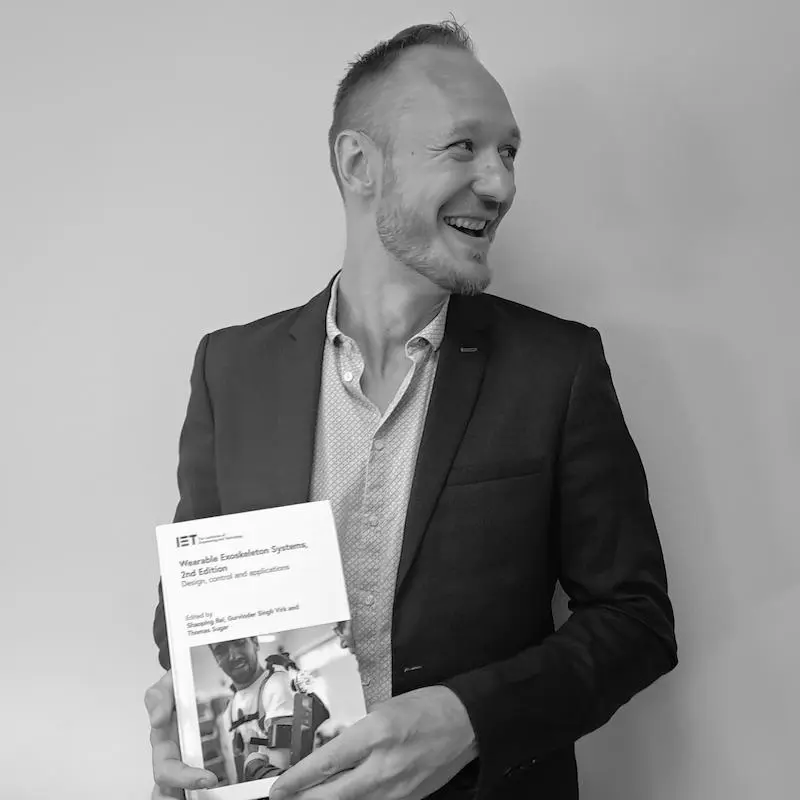
The second edition of Wearable Exoskeleton Systems: Design, Control and Applications has just been published. As an international reference work, this new edition, enriched with the latest technological advances since 2018, includes new chapters dedicated to wearable sensors, performance evaluation methods, and lessons learned from the field.

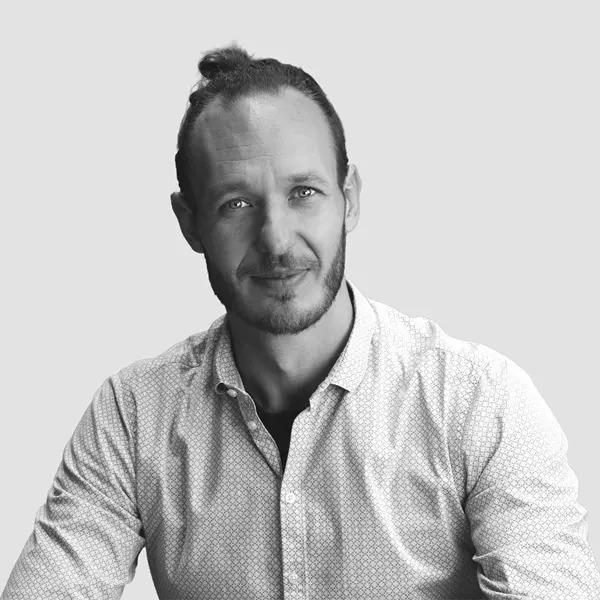
Bérenger Le Tellier, PhD in Biomechanics and Director of the HAPO team, is the co-author of chapter 14. Intended for engineers, researchers, and students as well as professionals in robotics, mechatronics, health, or workplace safety, this book provides a comprehensive and up-to-date overview of the exoskeleton ecosystem. To give you a concrete glimpse of what Bérenger shares, here is the interview that summarizes the main ideas of his chapter.

Bérenger, you contributed to the second edition of Wearable Exoskeleton Systems. What is your chapter about?

My chapter is titled "Lessons learned from exoskeletons developed from the perspective of geographical and/or user acceptance." It is somewhat of a field testimony. I recount the HAPO adventure: how we transitioned from an ambitious but commercially challenging first exoskeleton — the Shiva Exo — to a complete range of devices now deployed worldwide. The central idea is that developing a good exoskeleton is not just about solving a technical problem. It is primarily about understanding the humans who will wear it.

Why talk about musculoskeletal disorders (MSDs) to introduce the topic of exoskeletons?

Because this is where it all begins. MSDs (Musculoskeletal Disorders) are a massive public health issue, often underestimated. In France, for example, they account for 30% of sick leaves and 88% of recognized occupational diseases — approximately 22 million lost workdays each year and nearly 2 billion euros in direct costs for companies. In Germany, the figures reach 17 billion euros in production losses. And this is only the tip of the iceberg: one must also consider turnover, loss of expertise, impact on company reputation... Exoskeletons are not a magic solution, but they are part of the serious responses to this problem. And statistics are beginning to prove it.

The word "exoskeleton" often brings to mind Iron Man or RoboCop. How do you position yourself in relation to these images?

This is precisely one of the first obstacles to overcome! Depending on your interlocutor, "exoskeleton" evokes very different realities: the biologist thinks of arthropods, the comic book fan of a science fiction armor, the doctor of a rehabilitation device, the athlete of performance equipment... In the professional world, exoskeletons (also known as physical assistance devices) are primarily intended to relieve the worker by reducing pain and fatigue. We talk about preserving the human. So we are very far from Iron Man, who advocates for the augmented human.

How did the HAPO adventure begin?

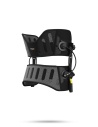
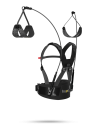
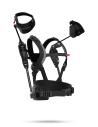
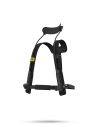
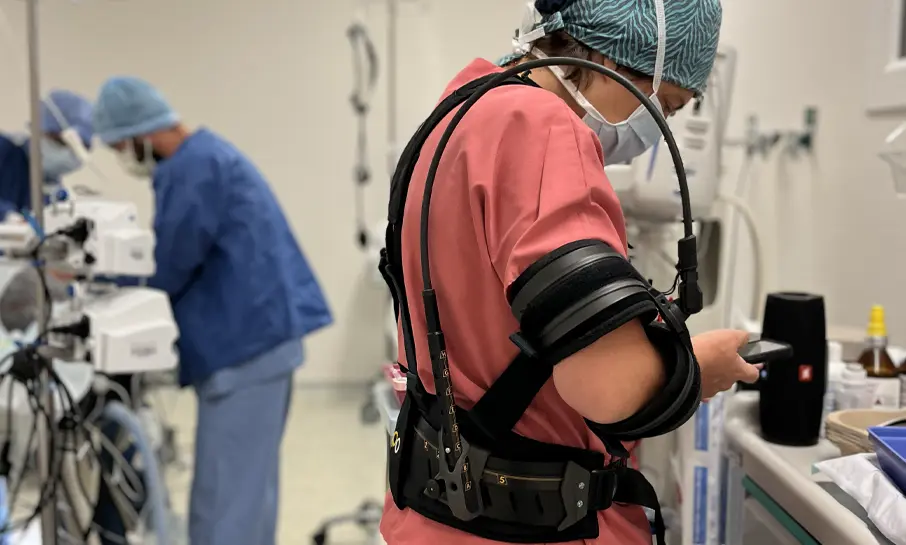
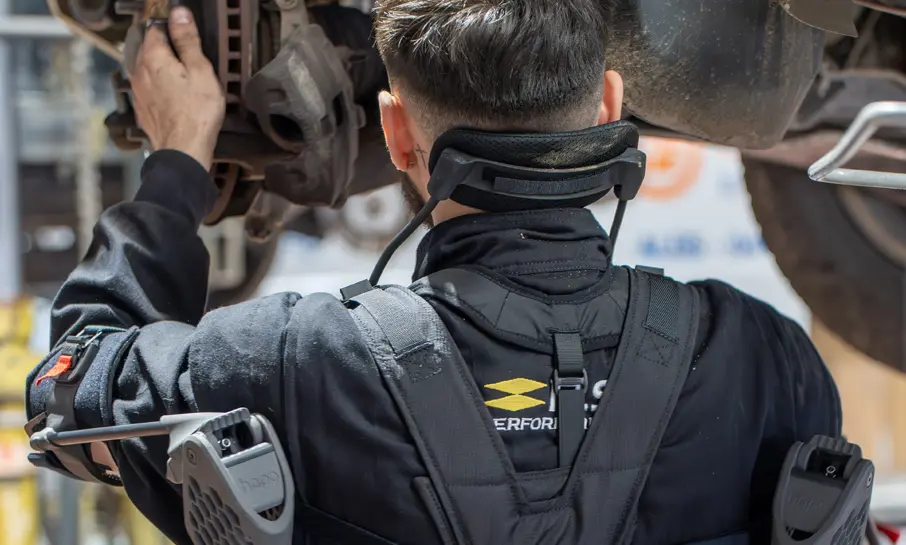
Everything starts with the French company ErgoSanté, which initially offered tertiary solutions for maintaining employment for people with disabilities. In 2016, the team decided to expand its mission to the prevention of MSDs (Musculoskeletal Disorders). This marked the beginning of an adventure in a market that barely existed yet. The first major project was the Shiva Exo, developed in collaboration with SNCF. Three years of work, many prototypes, lots of coffee... and a multifunctional non-motorized exoskeleton: a true Swiss army knife. The story continued without interruption, and we now offer 8 models of exoskeletons (5 for the back, 2 for the upper limbs, and 1 for the neck), and we are established in about thirty countries.

The Shiva Exo was a commercial failure. How did you experience it?

Honestly? Like a valuable lesson. In hindsight, the assessment was clear: too heavy (6.5 kg), too cumbersome, too complex, too expensive for large-scale deployment. And the industrial exoskeleton market was almost non-existent in 2019 — it would have been like trying to sell a smartphone in prehistoric times. But in reality, the Shiva Exo was a tremendous success in terms of development. It forced us to ask the right questions: who is the real end user? How to respect biomechanics? How to reduce weight? What do we really expect from an exoskeleton? […] These are the questions that made everything that followed possible.

What fundamentally changed with the release of the Hapo Back, the direct successor to the Shiva Exo?

Philosophy. We moved from a global full-body support to targeted back support. We removed everything that did not directly contribute to this goal. The result: a 1 kg device, ten times cheaper than the Shiva Exo, produced 99% in-house — sewing, composite springs, 3D printing. And most importantly, workers immediately adopted it. Its lightness, compactness, and simplicity instantly removed the main obstacles previously encountered. Our mantra became: keep only the essentials. And as simple as possible, it’s better! [rires]

You emphasize the importance of users in development a lot. Why?

Because the real experts are not the engineers. They are the workers. Only they intimately know their needs, their constraints, their environment. It was therefore essential to involve them at every stage of development to understand their opinions and feelings. Details that seemed minor had a huge impact: switching from yellow springs to black springs improved acceptance. Offering a version with reduced assistance force allowed for better adaptation to certain body types. Further simplifying the thigh-exoskeleton interface made setup more intuitive. Every field feedback is an opportunity for improvement.

You have also created an internal scientific research team. What is its role?

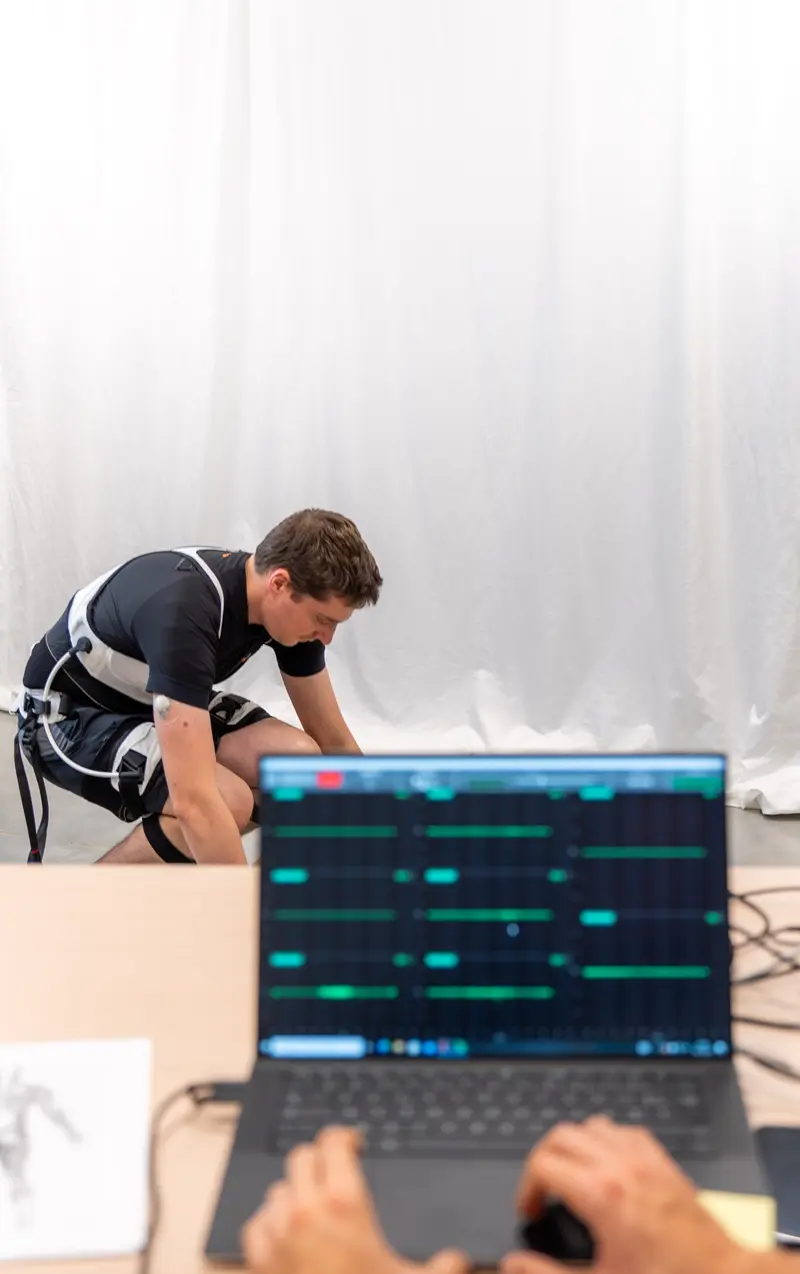
The Scientific Research Group is a team that operates independently from the Study Office, with its own governance and objectives. Its role is to provide a neutral and scientific perspective on our products. It evaluates prototypes in the laboratory throughout the development process by considering objective criteria (muscle activity, kinematics, postural balance, heart rate monitoring) and subjective criteria (perceived comfort, freedom of movement). The protocol and results are then published and freely available on our website. It is important for us to claim this transparency, rather than providing figures that promise the moon but have more marketing value than scientific value!

In parallel, we have also developed the Hapo LEA application which allows for the assessment of the risk of developing MSDs. Based on a video representative of a real work situation, the AI algorithm (trained in our biomechanics laboratory) identifies anatomical points and compares the posture with the RULA method, automatically generating a report. It is a real on-field assistance tool that is currently used by more than 38,000 people and has conducted 78,000 analyses. And it's free. Try it and you'll adopt it!

What challenges still need to be addressed?

Two in particular are close to my heart.

The first is the thermal issue: in hot environments like some automotive factories in the summer, wearing an exoskeleton can become very uncomfortable, or even impossible. This is a point raised notably by Ford Valencia during the WearRAcon Europe 2023 conference. It is a real technical challenge because solutions must be found to keep the exoskeleton on the body while minimizing contact areas that cause thermal discomfort.

The second challenge, I would say, is more of a societal one. Even though mindsets have evolved significantly in recent years, misconceptions and prejudices are still too prevalent. And this doesn't only concern the workers who might use exoskeletons, but also their management, occupational health services, public authorities... It is really important to understand that prevention is more cost-effective than curative measures. We all have everything to gain from it!

A final message to conclude?

Developing an exoskeleton is much more than just technique. It's a human adventure. What I hope this chapter conveys is that mistakes are part of the journey — and they are often more instructive than successes. The professional exoskeleton market is still young, and we are collectively writing its history. At Hapo, we are actively contributing to it!

About the author

Doctor in Biomechanics and Engineer by training, Bérenger Le Tellier candidly shares the story of Hapo, or how the company managed to position itself among the world leaders in non-motorized exoskeletons in just a few years. His past experience with both R&D Teams and Field Teams has given him a deep understanding of the exoskeleton world, or more precisely, knowledge of the levers that allow for the development of an exoskeleton best suited to field needs. Alongside his missions at Hapo, Bérenger actively participates in standardization committees on exoskeletons (notably AFNOR, CEN, and ISO) and contributes to advancing knowledge on the subject through his conferences and scientific work.

See Bérenger's LinkedIn profile.

Contact one of our experts

Our teams are at your disposal to assess your needs and organize real-life tests to allow your employees to experience the benefits of Hapo exoskeletons in their work environment.

Contact one of our experts

Our teams are at your disposal to assess your needs and organize real-life tests to allow your employees to experience the benefits of Hapo exoskeletons in their work environment.