Exoskeleton: relieving caregivers and securing daily movements

Exoskeleton: relieving caregivers and securing daily movements

Preserve healthcare workers in the face of on-the-ground challenges

In healthcare facilities, physical constraints are part of everyday life. Nursing assistants, nurses, stretcher-bearers, and specialized practitioners perform technical tasks, patient handling, and prolonged postures in succession.

These situations, repeated throughout the day, significantly expose workers to musculoskeletal disorders (MSDs), which are now among the leading causes of work stoppages in the medical sector. Lifting, repeated bending, and working in static positions intensely strain the back, shoulders, and upper limbs.

This on-the-ground reality is compounded by structural pressure. Teams operate in a demanding environment, marked by intensified care and often constrained organization. The aging of healthcare professionals also heightens these challenges, with an increasing need to preserve physical capacity over time and limit occupational wear and tear.

Traditionally implemented solutions, such as training in movements and postures or handling equipment, provide partial answers. They remain dependent on actual working conditions and do not cover all situations encountered daily. A gap persists between theory and practice.

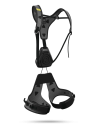
In this context, a complementary approach is necessary. The passive exoskeleton developed by Hapo fits into this logic. Lightweight, non-motorized, and designed to accompany movements without constraining them, it can be worn for long periods. Its objective is clear: to reduce physical strain while respecting the freedom of movement and precision of action essential to healthcare professions.

Why do healthcare professionals need an exoskeleton?

A real-world reality: constant physical constraints

The healthcare professions rely on constant physical involvement. Each day alternates between technical tasks, patient support, and unpredictable situations. Transferring a patient from the bed to a chair, for example, heavily engages the lower back, even with good practices. These actions are repeated, sometimes urgently, without always being able to rely on suitable equipment.

Prolonged bent postures are another major constraint. During a wash, a treatment, or patient support, professionals adopt demanding positions for several minutes, or even longer. Added to this is the work with arms elevated, common in the operating room or during certain technical procedures. These positions strain the shoulders and neck, leading to progressive muscle fatigue.

Key figures of MSDs in healthcare

The healthcare sector is among the most exposed to musculoskeletal disorders. Available data shows that these pathologies account for a significant portion of occupational diseases reported in healthcare facilities. Key points to remember:

MSDs are one of the leading causes of work stoppages in the medical sector: 94% of recognized occupational diseases in the sector are related to MSDs*.

The impact is not limited to the health of professionals: it directly influences absenteeism, team disorganization, and turnover. 2.3 million workdays are lost due to the sick leaves of affected employees*.

The cost for companies in the sector is 160 million euros (amount of contributions paid)*.

Limitations of current equipment

Facilities already have solutions to limit risks, but their effectiveness remains partial given the diversity of situations.

The patient lift, for example, is a valuable aid for certain transfers. However, it cannot be used in all configurations. Lack of time, limited space, or the patient's condition sometimes make its use difficult, if not impossible.

Moreover, the organization of care does not always allow for the application of ideal recommendations. Scheduling constraints, emergencies, and limited staff force caregivers to constantly adapt. In this context, existing tools do not cover all the real needs on the ground.

A gap persists between the available solutions and the daily reality of professionals. It is precisely in this space that the exoskeleton finds its relevance, providing assistance directly at the point of action.

This reality weighs on structures, both from a human and organizational standpoint. Preserving caregivers thus becomes a strategic issue.

The exoskeleton Hapo: an adapted solution for the medical field

Simple operation and without motorization

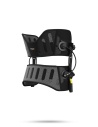
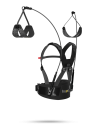
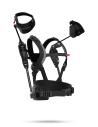
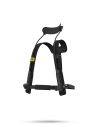
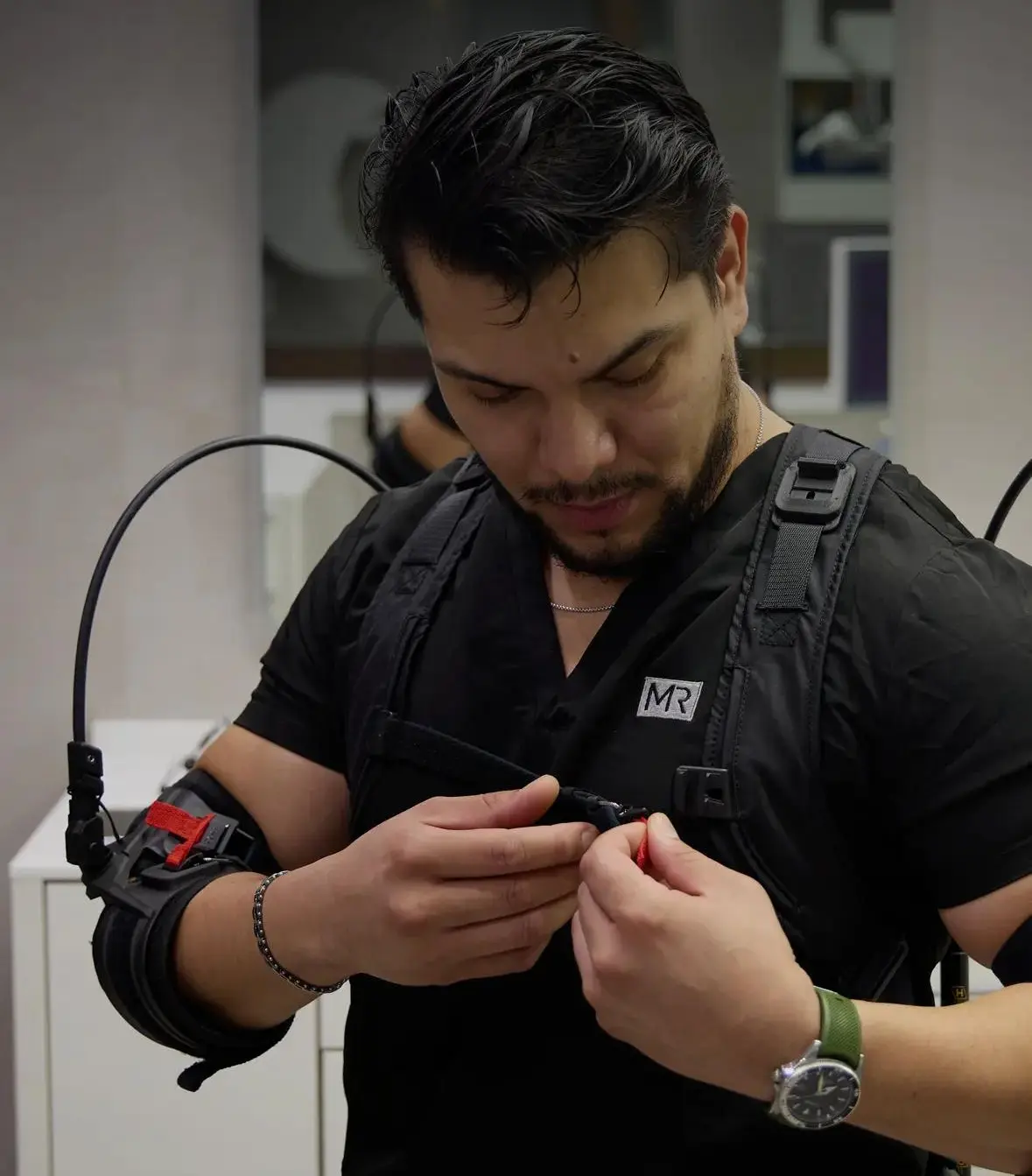
The passive exoskeleton Hapo is based on a principle of mechanical assistance, without a motor or electronic system. It supports body movements by redistributing efforts, particularly in the back and upper limbs, to limit physical constraints during everyday actions.

The absence of a battery is a major advantage in a medical environment. No need for recharging, no specific technical management. The device remains available at all times, without logistical constraints.

This simple operation promotes its acceptability in the field. Professionals can easily integrate it into their routine, without complex training or apprehension related to intrusive technology. The exoskeleton becomes a discreet tool, serving the action.

Specific benefits for caregivers

Designed to meet the demands of care professions, the Hapo exoskeleton offers great freedom of movement. It supports movements, rotations, and bends without restricting the user, an essential point in environments where every gesture must remain precise and fluid.

Its quick setup allows for immediate use, right from the start of the shift. In just a few seconds, the professional can equip themselves and benefit from muscle support tailored to their tasks.

The device is also compatible with medical attire. Lightweight and unobtrusive, it easily integrates under or over a lab coat, without hindering the execution of care or contact with patients.

Continuous focus usage: a true lever of differentiation

One of the major advantages of the passive exoskeleton Hapo lies in its ability to be worn for long periods. Unlike some rigid or motorized solutions, often used occasionally, it supports the user throughout the day.

This approach changes the logic of use. It is no longer equipment reserved for specific tasks, but continuous support that reduces the accumulation of muscle fatigue. Over the hours, the impact becomes tangible: less tension, better endurance, and a sustainable preservation of physical abilities.

In a sector where the repetition of efforts is constant, this continuity makes all the difference.

Which healthcare professions are concerned with the exoskeleton?

The exoskeleton is not limited to a single use. In the medical and paramedical sector, many professions share similar physical constraints, even if the actions differ. This diversity of uses makes it a cross-functional tool to improve working conditions, with benefits tailored to each specialty.

Exoskeleton for caregiver

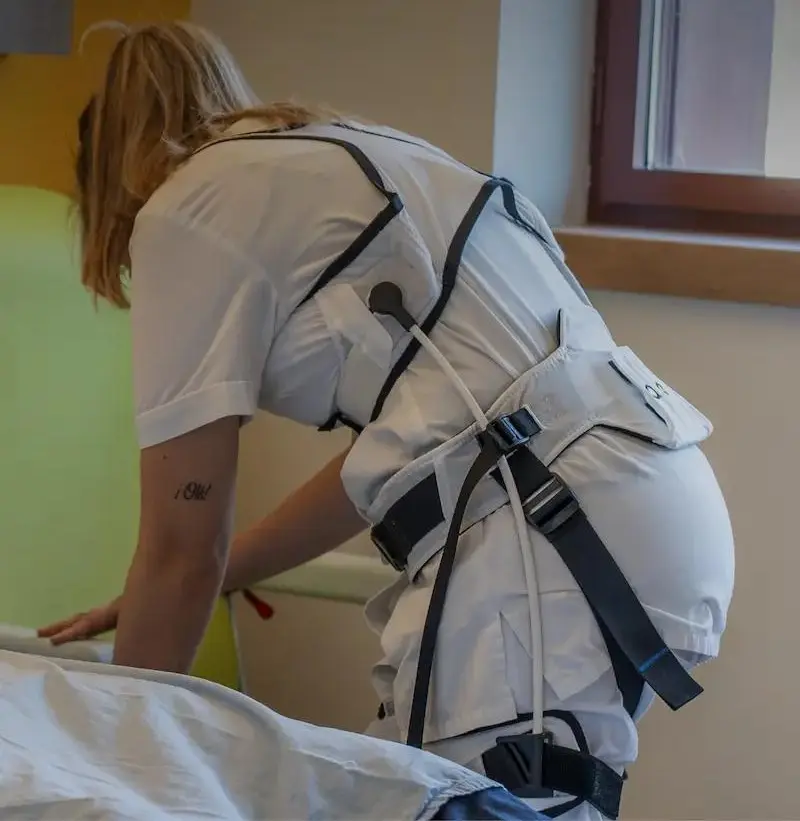
The daily life of caregivers largely involves patient handling. Transfers from bed to chair, repositioning, or assisting with bathing put a significant strain on the lower back.

The exoskeleton helps reduce lumbar strain during these repetitive tasks. It provides mechanical support that limits the fatigue accumulated over the course of interventions, while allowing complete freedom to safely assist the patient.

Exoskeleton for nurse

Nurses alternate between technical care, frequent movements, and patient assistance. Some interventions require demanding postures, especially during care in a bent position or in confined spaces.

The exoskeleton supports these situations by reducing muscle tension. It becomes particularly relevant during long days or irregular hours, where physical fatigue gradually sets in.

Exoskeleton for surgeon

In the operating room, surgeons stand for long periods, often in demanding static positions. The precision of the movement must remain constant, even after several hours.

A passive exoskeleton helps relieve continuously strained muscles, particularly in the back and shoulders. This assistance helps maintain a level of comfort compatible with the precision required.

Exoskeleton for dentist

Dentists regularly work in a bent posture, with significant strain on the neck and back. These positions, maintained over time, promote the onset of chronic pain.

The exoskeleton acts as a discreet support, helping to maintain a more comfortable posture. It aids in preventing tension while respecting the precision of movements necessary for dental care.

Exoskeleton for stretcher-bearer

The stretcher-bearers ensure the transport of patients within the facilities. These movements involve dynamic efforts, especially when handling stretchers or medical beds.

The exoskeleton supports these movements by reducing fatigue related to repeated efforts. It helps improve physical comfort throughout the entire work process.

Exoskeleton for staff in nursing homes

In nursing homes, the teams face a high frequency of handling tasks, often in a context of limited resources. Transfers, mobility assistance, and daily care intensely engage the professionals.

The exoskeleton is a valuable aid to limit occupational wear. It helps to better distribute the efforts and maintain more sustainable working conditions over time.

This diversity of applications shows that the exoskeleton does not cater to a single use, but to a set of professional realities. It adapts to the specific constraints of each professional, while providing a coherent response to a common challenge: sustainably preserving physical abilities in care professions.

Case studies: how the exoskeleton improves the daily lives of caregivers

The integration of an exoskeleton in a healthcare facility is not just a simple technical innovation. It is assessed through real uses, observed in the field, in direct contact with the teams. Several hospitals have already experimented with this approach, with concrete feedback on the daily impact.

Example in Hospital Center: a Gradual and Measured Adoption

In a hospital center like the one in Aubagne, the introduction of the exoskeleton was done in phases. Initially tested on targeted positions, it quickly sparked the interest of teams facing the most significant physical constraints.

The involved departments were able to observe the use of the exoskeleton in various situations: patient transfers, in-room care, mobility assistance. This experimentation phase allowed for the identification of the most relevant uses and the adaptation of the deployment.

Before / After: A Perception That Evolves Rapidly

Before use, certain reservations often arise. Wearing additional equipment can raise questions about discomfort, freedom of movement, or acceptance by patients.

After a few days of use, the perception changes. Professionals notice a reduction in muscle tension, particularly in the most strained areas such as the lower back or shoulders. The exoskeleton gradually becomes an integrated tool in the routine, rather than an external element.

User experience: between comfort and endurance

Feedback from the field highlights an immediate benefit in work comfort. The gestures remain the same, but the perception of effort changes. This type of feedback illustrates a natural adoption, without a break in professional habits.

Field feedback:

  • “We feel less tired at the end of the shift, especially after several transfers.”
  • “The back is less strained, we endure better over time.”
  • “At first, we think about it, then we almost forget it.”

Measurable gains over time

Beyond the feeling, certain indicators allow for the objectification of the benefits:

Reduction of muscle fatigue at the end of the day

Improvement of postural support during care

Reduction of tension in risk areas (lower back, shoulders)

Better endurance on long or physically demanding days

These gains do not transform the gestures, but they modify their impact on the body. It is this approach that makes the difference: supporting the actual work without constraining it.

The exoskeleton thus fits into a pragmatic logic. It does not replace existing practices but complements them by providing support directly at the closest point to the gesture. It is in this continuity of use that its effectiveness becomes fully meaningful.

Integrating an exoskeleton in a healthcare facility: method and best practices

The integration of an exoskeleton cannot be improvised. To derive lasting benefits, it is essential to adopt a structured approach, focused on real uses and team buy-in. This approach determines both the effectiveness of the device and its acceptance in the field.

1 Essential Job Study

Before any deployment, a precise analysis of the workstations is necessary. Each profession, each service, presents specific constraints that need to be identified.

Observing movements helps identify the most demanding situations: transfers, bent postures, static work, or work at height. This detailed analysis highlights the moments when the exoskeleton can provide real added value.

The identification of constraints is not limited to physical efforts. It also includes the work environment, available spaces, the pace of care, and interactions with patients. This comprehensive view ensures coherent integration with existing practices.

2 Team Support

The commitment of professionals is a key factor for success. An exoskeleton, no matter how efficient, will only be effective if it is accepted and used under the right conditions.

Acceptance involves a phase of discovery and experimentation. Caregivers must be able to test the device, understand how it works, and evaluate its benefits in their own work context.

Training also plays a central role. It does not require complex technical skills but allows for the adoption of the right reflexes from the first uses. This step promotes quick handling and limits resistance related to novelty.

3 Removing Barriers: A Key Step for Successful Integration

Some hesitations may arise when introducing an exoskeleton. Identifying and addressing them can accelerate its adoption.

The fear of constraint is a common concern. Professionals worry about equipment that might limit their movements or slow down their actions. Passive exoskeletons, like those developed by Hapo, specifically address this concern by prioritizing freedom of movement.

The robotic image can also hinder acceptance. In an environment where human interaction is essential, it is important for the equipment to remain discreet and non-intrusive. A lightweight and unobtrusive design helps reassure both users and patients.

Finally, comfort is a central issue. A device worn for several hours should quickly become unnoticeable. Ergonomics, weight, and ease of adjustment directly influence its practical use in the field.

Successful integration therefore relies on a balance: understanding constraints, supporting teams, and removing barriers from the outset. This pragmatic approach is what transforms an innovative tool into a concrete solution for healthcare professionals.

Exoskeleton: What benefits for healthcare facilities?

Beyond improving individual comfort, the exoskeleton is part of a global logic of performance and prevention. For facility managers, HR managers, and occupational health stakeholders, it represents a concrete lever to address several structural challenges.

Reduction of MSD risks

MSDs (Musculoskeletal Disorders) represent a significant human and organizational cost. By limiting the physical constraints associated with repetitive movements and handling, the exoskeleton helps reduce strain on high-risk areas, particularly the back and shoulders.

This preventive approach allows for action upstream, before the onset of pathologies, rather than managing their consequences.

Decrease in sick leave

Reducing physical constraints has a direct impact on absenteeism. Less pain and less accumulated fatigue also mean fewer risks of work stoppages related to musculoskeletal disorders.

For an establishment, this results in better service continuity, less team disorganization, and reduced costs related to replacements.

Team retention

In a context of recruitment tension, improving working conditions becomes a key factor in retention. Healthcare professionals are particularly sensitive to solutions that take into account their on-the-ground reality.

Offering equipment such as the exoskeleton sends a strong signal: that of an institution committed to the prevention and well-being of its teams. This approach can enhance attractiveness and limit turnover.

Improvement of working conditions

The exoskeleton contributes to a more global transformation of the work environment. It does not change the tasks, but improves their execution on a daily basis.

Professionals benefit from better physical comfort, reduced fatigue at the end of the day, and an ability to maintain their activity over time. This improvement is felt both individually and collectively.

For decision-makers, the issue goes beyond simple innovation. The exoskeleton is part of a sustainable prevention strategy, with measurable effects on the health of teams, service quality, and the overall performance of the establishment.

Why choose a Hapo exoskeleton?

In a market where solutions are multiplying, the choice of an exoskeleton is not solely based on technical characteristics. It relies on a comprehensive approach: understanding the field, the reliability of the device, and the ability to integrate sustainably into professional practices.

A French design focused on real uses

The Hapo exoskeletons are designed in France, with particular attention given to user constraints. This proximity to professional environments allows for the development of tailored solutions, tested and improved in direct connection with the field.

This positioning promotes a better match between the product and the concrete needs of healthcare professionals.

A specialization in non-motorized exoskeletons

Hapo has chosen to focus on a specific expertise: passive exoskeletons. This technical approach is based on a strong conviction, which is to offer simple, reliable, and immediately operational devices.

Without motorization or complex electronics, these exoskeletons provide effective mechanical assistance without relying on a power source. This simplicity becomes an advantage in demanding environments, where availability and robustness are paramount.

A proven field return, from industry to healthcare

Before being deployed in the medical sector, Hapo solutions were used in industrial environments, where physical constraints are strong and repetitive. This feedback allowed for refining the devices, improving their ergonomics, and validating their long-term effectiveness.

The transition to the healthcare sector is part of this continuity. The needs differ, but the challenges remain similar: reducing fatigue, preserving the body, and supporting professional movements.

A pragmatic innovation, designed to be used

The exoskeleton Hapo is not intended to impress with its complexity. It serves a clear purpose: to be useful on a daily basis.

Its design prioritizes lightness, discretion, and ease of use. It integrates into existing practices without disrupting them, which facilitates its adoption by teams.

This pragmatic approach makes all the difference. The innovation does not lie in the technology for its own sake, but in its ability to effectively meet a concrete need.

FAQ - Exoskeleton and Care Professions

Is an exoskeleton suitable for nurses?

Yes, an exoskeleton is particularly suitable for nurses. Their work combines technical care, demanding postures, and patient mobilization. A passive exoskeleton helps reduce muscle tension without hindering movements or mobility, making it compatible with the demands of the profession.

Can an exoskeleton be worn all day?

Passive exoskeletons, like those developed by Hapo, are designed for prolonged use. Lightweight and without motorization, they can be worn for a full day, provided they are properly adjusted. Their purpose is to continuously support movements without creating additional constraints.

Does the exoskeleton replace a patient lift?

No, the exoskeleton does not replace a patient lift. The two pieces of equipment are complementary. The patient lift remains essential for certain secure transfers, while the exoskeleton provides support during daily tasks, especially when using heavy equipment is not possible.

Is it allowed in a hospital setting?

Yes, the use of an exoskeleton is allowed in a hospital setting, provided that the hygiene, safety, and organizational rules specific to the establishment are respected. Its integration is generally part of an occupational risk prevention approach.

Which exoskeleton for healthcare staff?

For healthcare professions, passive exoskeletons are the most suitable. They offer mechanical assistance without motorization, ensuring great freedom of movement and simple daily use. The choice then depends on the specific constraints of the position: back, shoulders, static posture, or handling.

Does the exoskeleton really reduce MSDs?

An exoskeleton does not eliminate MSDs, but it helps reduce the risks. By decreasing physical strain and muscle fatigue, it limits the repeated stress that causes these disorders. Its effectiveness relies on appropriate use and integration into a comprehensive prevention approach.

Contact one of our experts

Our teams are at your disposal to assess your needs and organize real-life tests to allow your employees to experience the benefits of Hapo exoskeletons in their work environment.

Contact one of our experts

Our teams are at your disposal to assess your needs and organize real-life tests to allow your employees to experience the benefits of Hapo exoskeletons in their work environment.