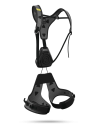
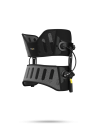
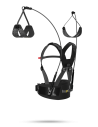
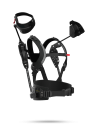
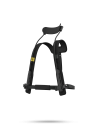
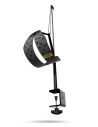
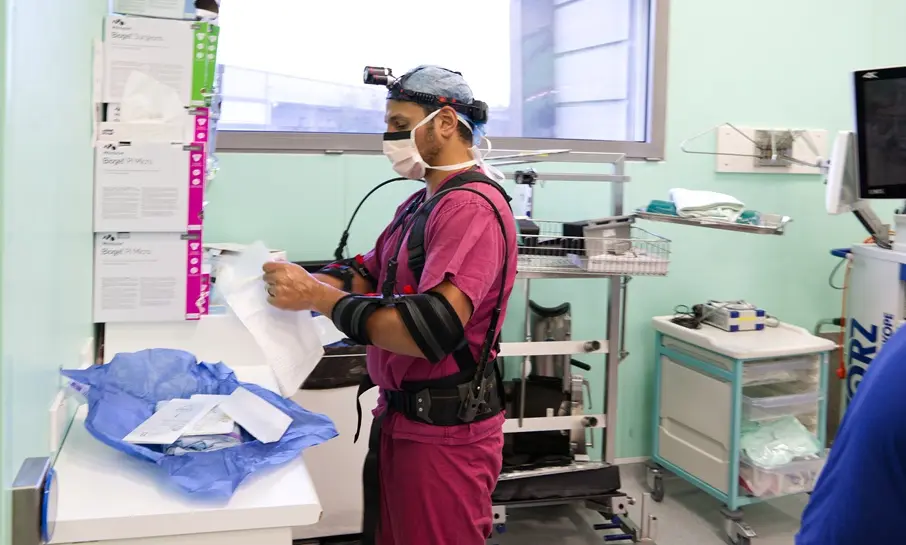
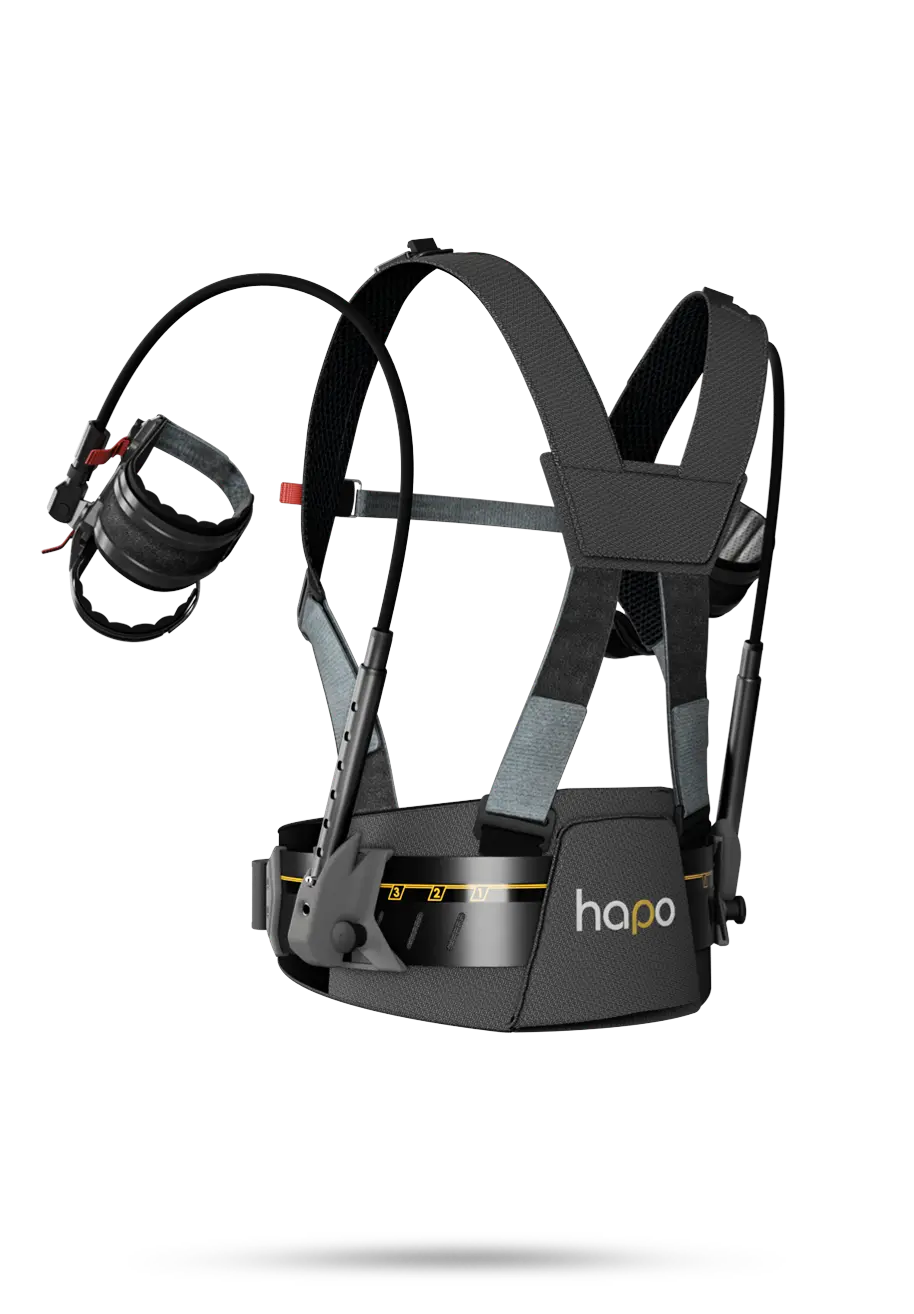
Hapo FRONT is a lightweight, passive exoskeleton designed to support surgeons' arms during prolonged procedures — helping reduce shoulder muscle strain without restricting natural movement.
Hapo FRONT is a lightweight, passive exoskeleton designed to support surgeons' arms during prolonged procedures — helping reduce shoulder muscle strain without restricting natural movement.
"My shoulders seem to tire more quickly, even during shorter procedures."
"I worry that fatigue could affect my steadiness during surgery."
Precision shouldn't come at the expense of comfort.
Surgery demands sustained concentration and often involves maintaining physically demanding positions for extended periods:
Prolonged strain on the shoulders and arms
Discomfort in the neck, shoulders and upper back
Muscle fatigue during demanding procedures
Persistent discomfort and fatigue after a long day in theatre
Hapo FRONT is designed to ease the physical demands of surgery by supporting your arms and reducing shoulder muscle strain — helping you stay more comfortable throughout prolonged procedures.
Why wear an exoskeleton during surgery ?
Supports natural surgical movements
Greater comfort during prolonged procedures
Helps reduce shoulder muscle fatigue
Reduces physical strain on the shoulders
Surgeons who have tried Hapo FRONT share their experience.
Surgeon
Dr. Daniel A.
"You really feel the difference. It takes a considerable amount of strain off your shoulders."
Urologist
Dr Vincent
"I've been testing the device for two weeks, and I wouldn't want to work without it now."
Surgeon
Dr. Alexis D.
"You can really feel the added comfort and the support it provides during surgical movements."
Hapo FRONT can be used across a range of surgical specialities, including
orthopaedic, cardiac, plastic, ENT, urological, vascular and paediatric surgery
Hapo FRONT : shoulder support designed for surgeons
Designed with the physical demands of surgery in mind, Hapo FRONT provides targeted support for your arms and shoulders during prolonged procedures.
Its lightweight, passive design follows your natural movements, helping to reduce muscular effort while allowing you to move freely.
Designed with clinical hygiene requirements in mind
Designed to allow natural movement
Designed and made in France — 2-year warranty
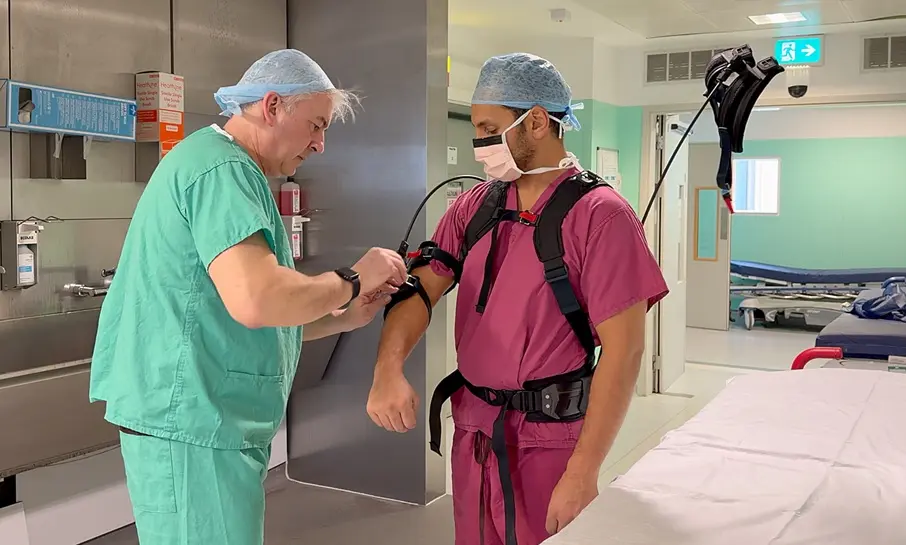
Hapo FRONT in real surgical settings
How does Hapo FRONT work ?
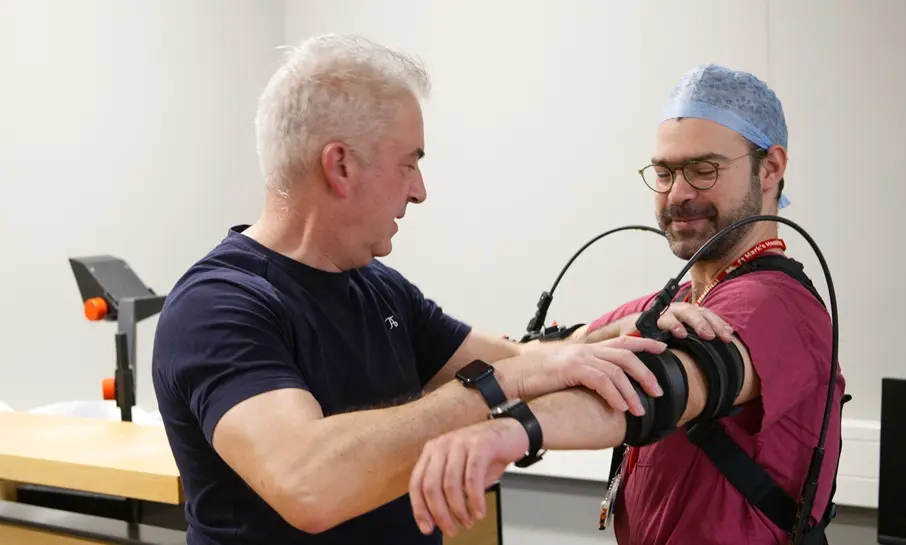
A passive, non-motorised design — worn much like a backpack
Quick and easy to put on — in under a minute
Provides continuous, progressive support as you move
Provides support from the moment you put it on
Meet Hapo FRONT
Meet Hapo FRONT
Hapo FRONT is a lightweight, passive exoskeleton designed to support the arms during tasks that involve holding them in front of the body.
By providing mechanical assistance to the upper limbs, it helps reduce the muscular effort required to maintain demanding working positions — making it particularly relevant for prolonged surgical procedures.
It doesn't restrict my movements, and above all, it provides consistent mechanical support throughout the procedure.”
Dr. Pierre D., orthopaedic surgeon
Who is Hapo?
Hapo is the French leader in the design and production of non-motorized exoskeletons. With its biomechanics research center and its advanced technology, the company has established itself as a key player in the international market for physical assistance devices.
Who is Hapo?
Hapo is the French leader in the design and production of non-motorized exoskeletons. With its biomechanics research center and its advanced technology, the company has established itself as a key player in the international market for physical assistance devices.
Request my free trial
Interested in trying Hapo FRONT in your surgical practice?
Complete the form below and our UK-based HAPO specialist will get in touch to discuss your needs and the options for arranging a trial in your clinical setting.
Find out whether Hapo FRONT is right for your surgical practice
Explore available purchasing and financing options
Discuss rental options if you prefer not to buy
Frequently Asked Questions
Will Hapo FRONT restrict my movements during surgery ?
Hapo FRONT is designed to follow your natural movements while providing support to the arms and shoulders. Its passive mechanism allows you to move freely, making it suitable for tasks that involve prolonged arm positioning.
Can Hapo FRONT be used in an operating theatre ?
Hapo FRONT is designed for use in demanding professional environments, including healthcare settings. Its suitability for use in an operating theatre should be assessed in accordance with your hospital's infection prevention and control procedures.
Our team can provide information on the materials, cleaning instructions and wearing options to support your assessment.
Can Hapo FRONT be worn with surgical clothing ?
Hapo FRONT is designed to be lightweight and relatively unobtrusive. Wearing options depend on the type of surgical clothing used and the requirements of your hospital.
Our specialist can help you assess how the device could be integrated into your working environment.
Is there scientific evidence supporting Hapo FRONT?
Yes. Hapo FRONT has been evaluated in research investigating the effects of passive shoulder exoskeletons during simulated laparoscopic surgery.
The study examined shoulder muscle activity under different working conditions, providing useful evidence on the potential ergonomic benefits of the device. (Read the scientific study)