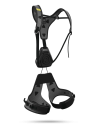
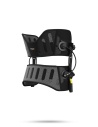
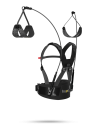
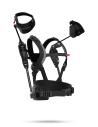
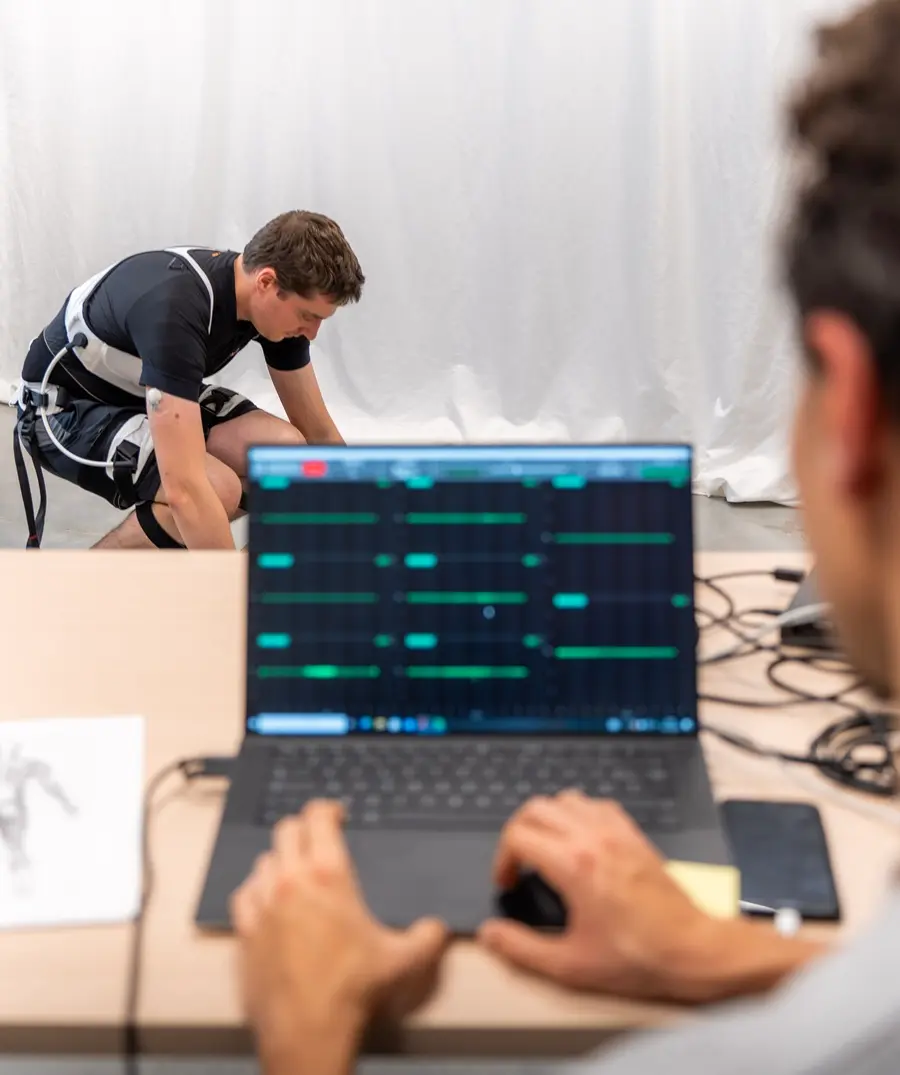
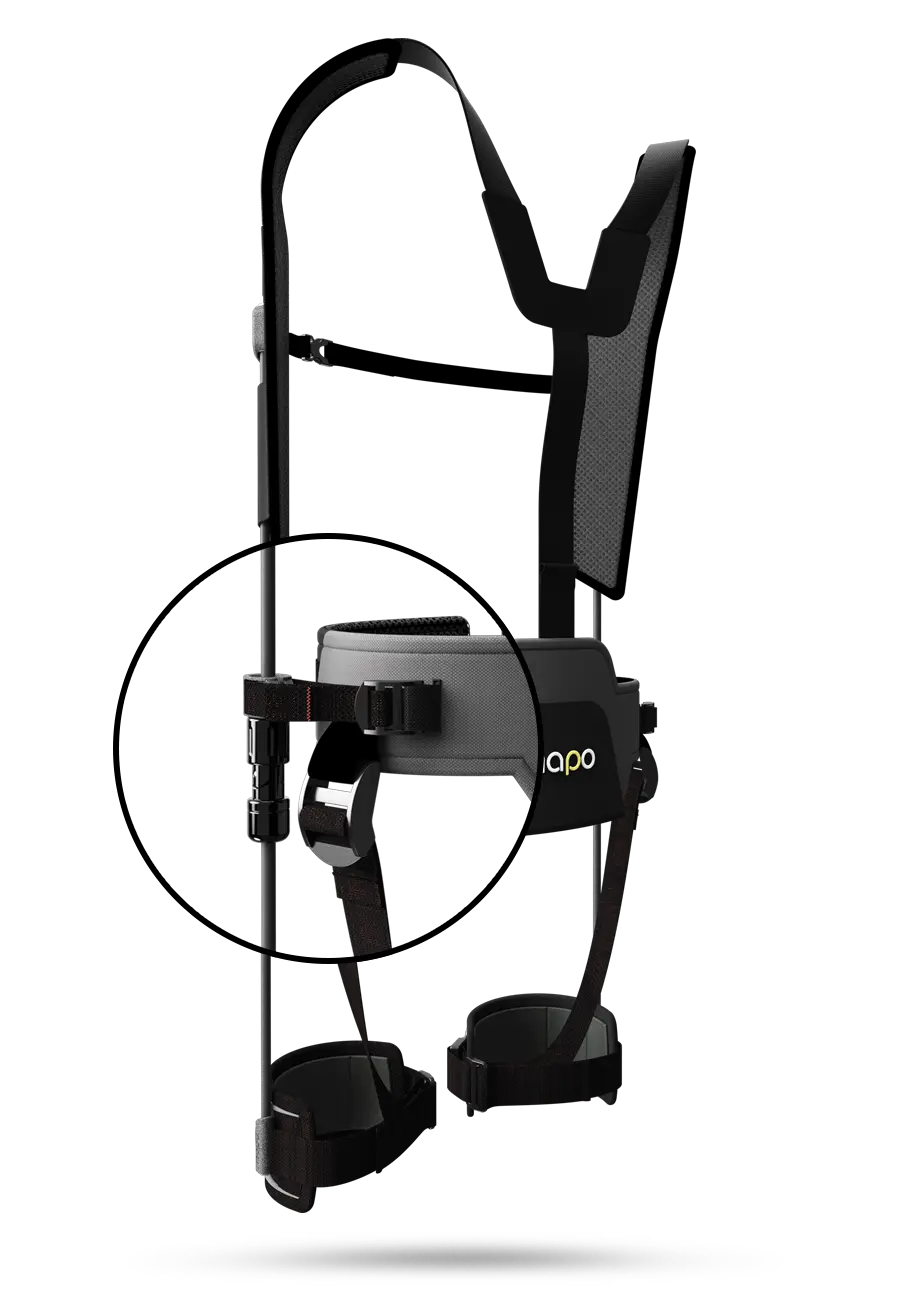
EMG plays a central role in the evaluation of exoskeletons. It allows for the measurement of their real effect on muscle activity, beyond just the user's subjective experience.
By comparing EMG curves with and without the exoskeleton, it becomes possible to observe a decrease in the activation of certain muscles, particularly in the back, shoulders, or thighs depending on the use. This reduction indicates a measurable relief of physical load.
These data provide a strong argument for ergonomists, safety officers, and management. They allow for justifying an equipment choice based on measured facts, rather than solely on subjective perception.