What is EMG (electromyography)? Understanding the measurement of muscle activity

What is EMG (electromyography)? Understanding the measurement of muscle activity

Electromyography, more commonly known by the acronym EMG, is often perceived as a tool reserved for the medical field. In reality, it is increasingly used in work analysis, ergonomics, and the prevention of musculoskeletal disorders. It allows for making visible phenomena that are invisible to the naked eye: the actual activity of the muscles engaged during a professional gesture.

Understanding what EMG is helps to better assess the physical load experienced by employees and to objectify situations of fatigue or overexertion.

EMG: Measuring the electrical activity of muscles

When a muscle contracts, even slightly, it generates an electrical activity. This activity corresponds to the signals sent by the nervous system to activate the muscle fibers. Electromyography involves capturing these signals in order to measure the intensity and duration of the effort exerted.

EMG does not measure visible force, but the level of muscle activation. A muscle can produce little movement while still being heavily engaged. This is particularly the case during posture maintenance, static work, or a repeated gesture with low amplitude.

This distinction explains why some positions seem not very strenuous at first glance, yet they generate significant fatigue over time.

How does an EMG measurement work in practice?

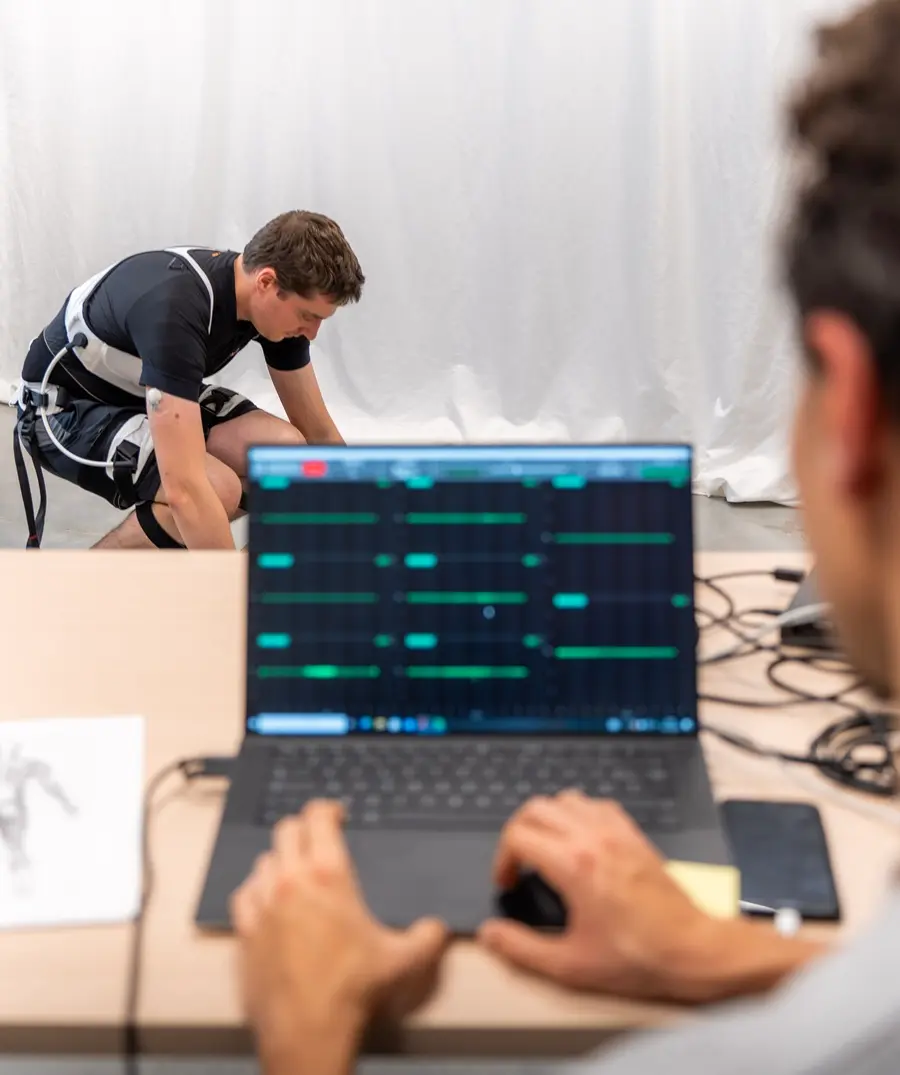
In ergonomics and prevention, surface EMG is the most commonly used. Electrodes are placed on the skin over the muscles being studied. They record the electrical signals during the execution of actual work.

The measurements are then analyzed in the form of curves. They show activation peaks, rest phases, the duration of exertion, and the repetition of efforts. This data helps to identify risk situations, such as excessively high or insufficiently recovered muscle activation.

EMG is often used in conjunction with field observations and ergonomic analyses. It provides an objective and quantified dimension to the feelings expressed by employees.

An EMG measurement session with exoskeleton use
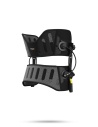
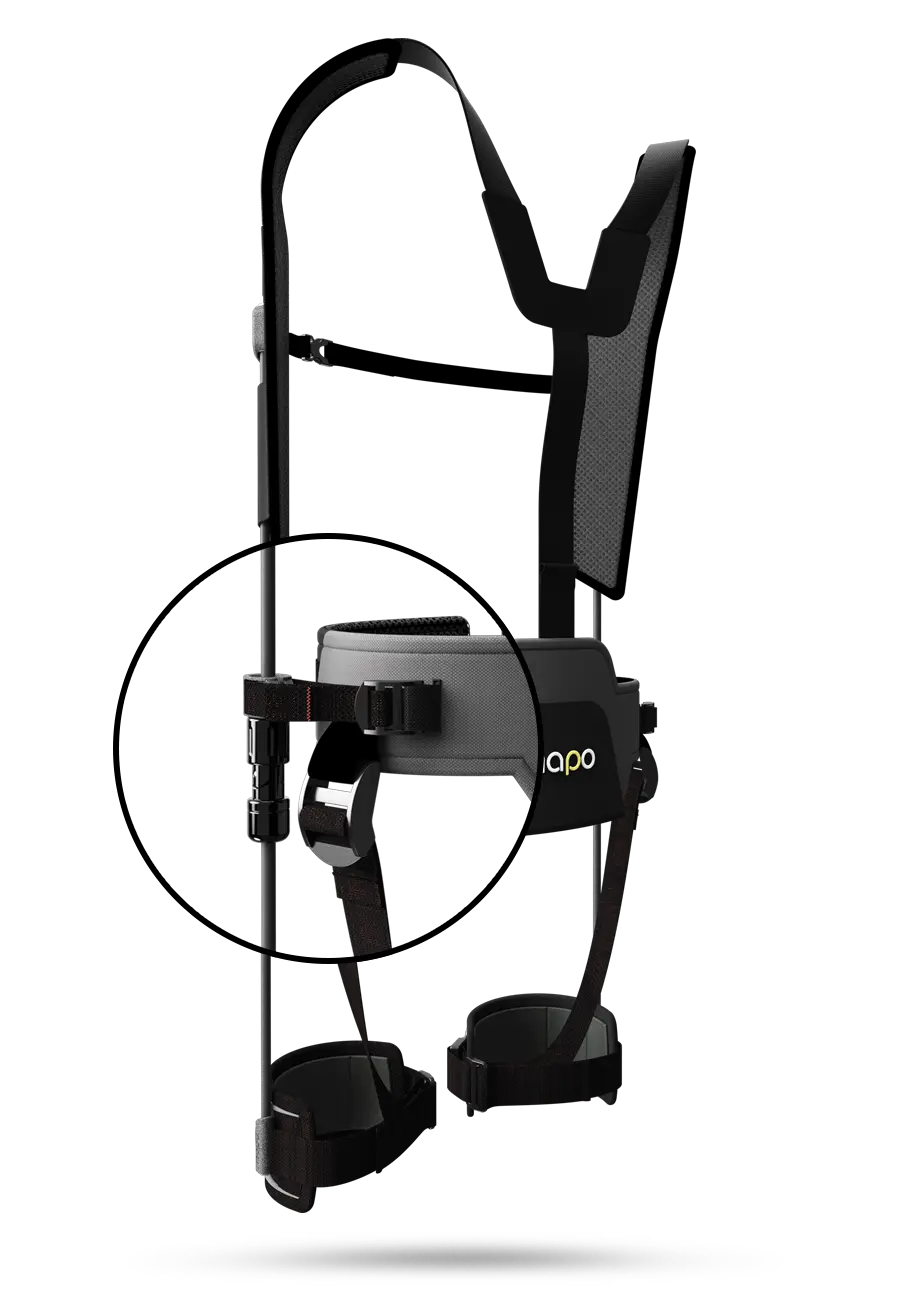
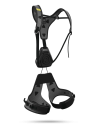
Exoskeleton Hapo BACK

Why EMG remains a key tool in the prevention of MSDs

Musculoskeletal disorders rarely develop suddenly. They result from prolonged exposure to excessive or poorly distributed muscular load. EMG can highlight this exposure before the onset of pain.

Studies show that a muscle stressed beyond certain thresholds, or without sufficient relaxation phases, sees its recovery capacity decrease. This chronic fatigue increases the risk of inflammation, loss of precision in movement, and injury.

In the workplace, EMG helps compare different work situations: before and after a modification, between two tools, or when introducing new equipment. It then becomes a decision support tool.

EMG and the evaluation of exoskeletons

EMG plays a central role in the evaluation of exoskeletons. It allows for the measurement of their real effect on muscle activity, beyond just the user's subjective experience.

By comparing EMG curves with and without the exoskeleton, it becomes possible to observe a decrease in the activation of certain muscles, particularly in the back, shoulders, or thighs depending on the use. This reduction indicates a measurable relief of physical load.

These data provide a strong argument for ergonomists, safety officers, and management. They allow for justifying an equipment choice based on measured facts, rather than solely on subjective perception.

An essential read for interpreting the results

EMG data requires rigorous interpretation. A decrease in muscle activity in one area is not enough to conclude an overall benefit. It is necessary to verify that it does not excessively transfer to other muscles or cause an unfavorable modification of the movement.

This is why EMG is always part of a comprehensive analysis of the work. It does not replace observation or dialogue with users. It provides additional scientific evidence.

The Hapo Approach: Connecting Measurement, Fieldwork, and Real Use

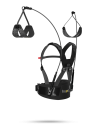
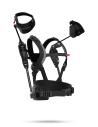
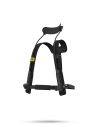
Hapo relies on data from EMG measurements and ergonomic analyses to design its passive exoskeletons. The goal remains constant: reduce muscle strain on targeted areas, without restricting movement or disrupting professional gestures.

The Hapo exoskeletons are designed to address concrete work situations, identified and measured. This coherence between fieldwork, science, and usage promotes their integration into serious and sustainable prevention approaches.

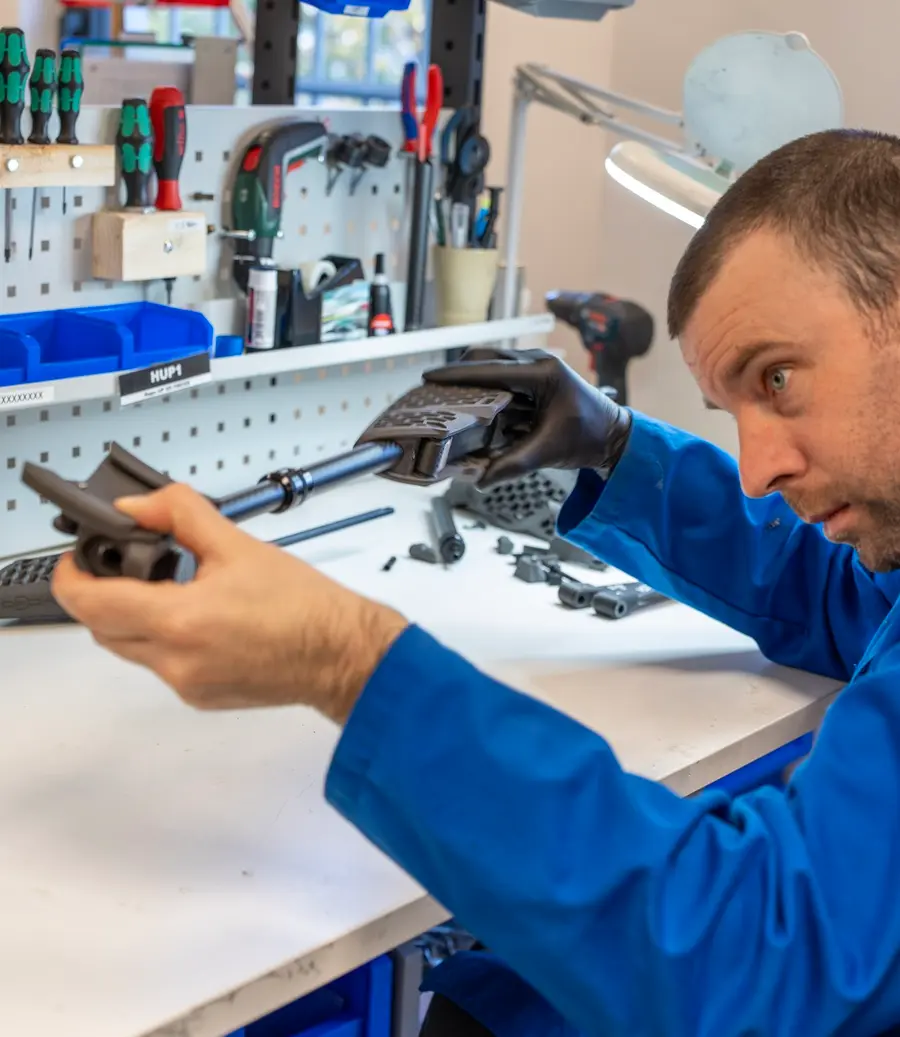
Exoskeleton manufacturing workshop

Making the invisible visible to better prevent

Electromyography makes visible what the body silently endures. It transforms a feeling of fatigue into usable data. In a preventive approach, this objectification facilitates dialogue, decision-making, and team engagement.

By combining ergonomic expertise, EMG measurements, and tailored solutions, it becomes possible to act before the pain sets in. It is with this logic that Hapo aligns its solutions: understanding, measuring, and supporting real work to preserve health over the long term.

Contact one of our experts

Our teams are at your disposal to assess your needs and organize real-life tests to allow your employees to experience the benefits of exoskeletons in their work environment.

Contact one of our experts

Our teams are at your disposal to assess your needs and organize real-life tests to allow your employees to experience the benefits of Hapo exoskeletons in their work environment.