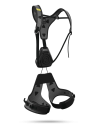
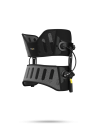
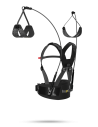
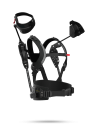
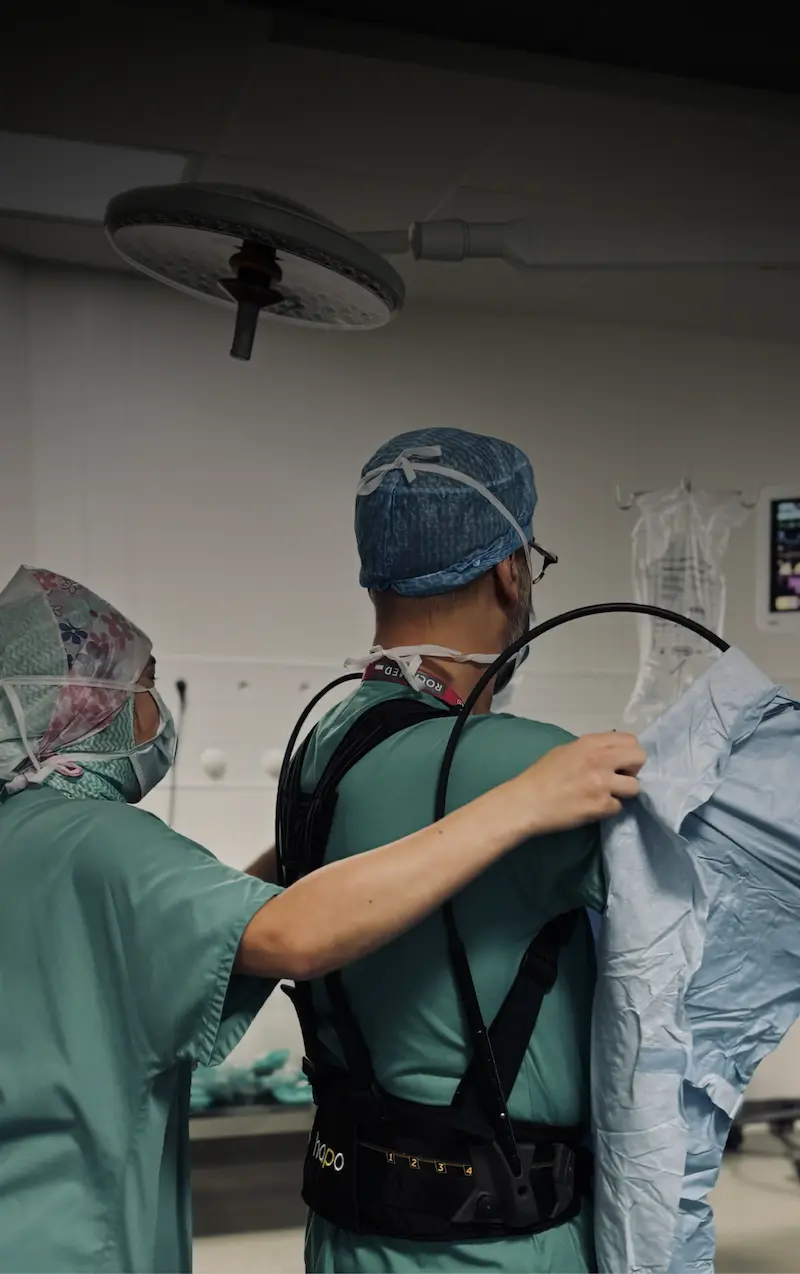
Laparoscopic surgery imposes significant ergonomic constraints on practitioners: prolonged arm positioning in front of the body, precise and repetitive movements, static postures.
To assess the contribution of an exoskeleton in this demanding environment, researchers at IRCAD conducted a comparative study with 20 surgeons of varying levels of experience.
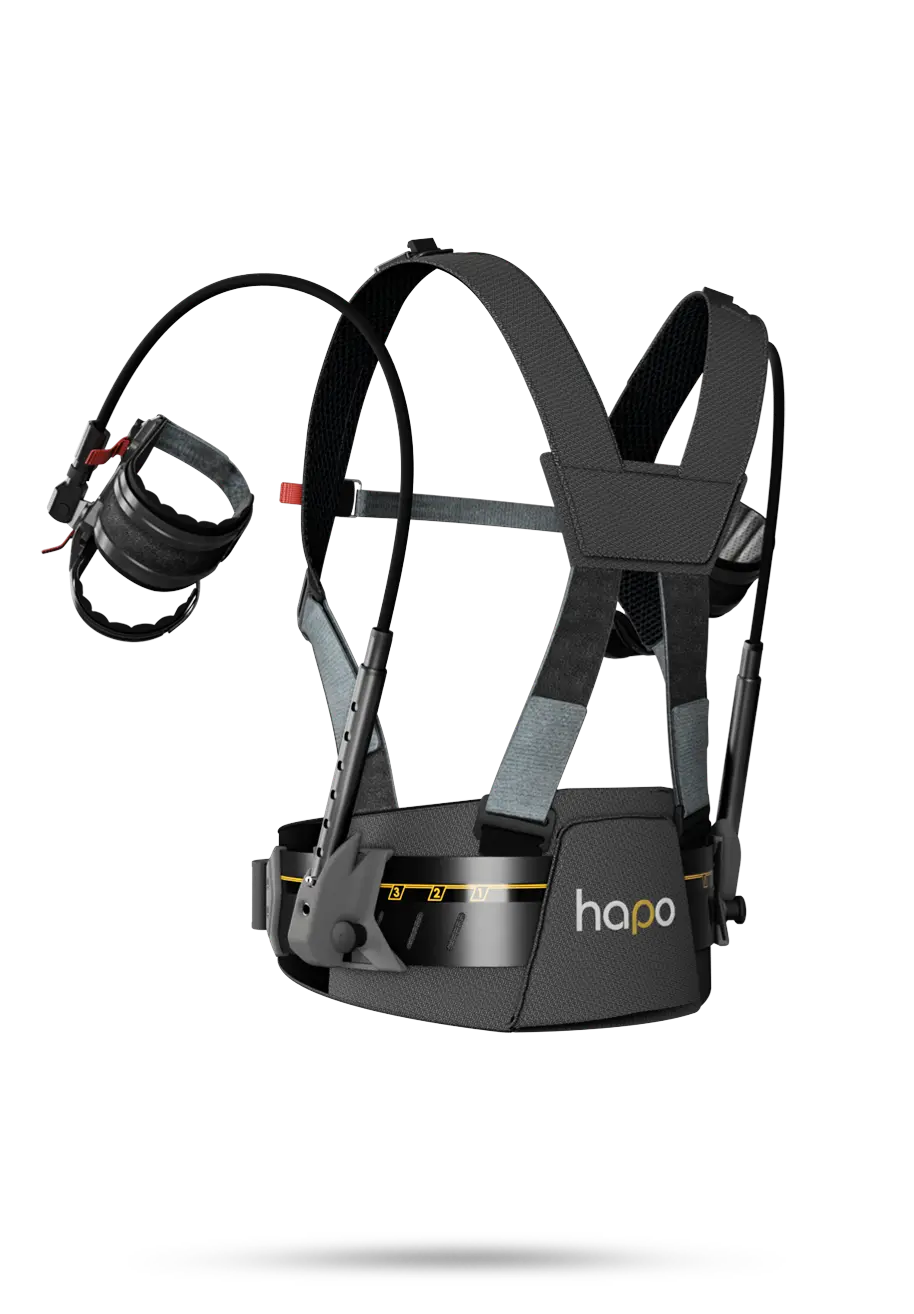
Each participant performed two surgical procedures on a pig model, one with the Hapo FRONT and the other without an exoskeleton.
The researchers specifically evaluated the perceived workload using the NASA-TLX questionnaire, a recognized method for analyzing multiple dimensions of activity, including physical demand, effort, and mental load.