Price of a professional exoskeleton:

understand the costs and invest wisely

Price of a professional exoskeleton:

understand the costs and invest wisely

Every investment must be considered in terms of costs and future gains. Purchasing an exoskeleton follows the same logic. In industrial, logistical, artisanal companies, or healthcare facilities, this reflection is often part of a broader approach to improving working conditions.

You may have noticed that the price differences are significant, ranging from a few hundred to several thousand euros, making comparison complex without a clear analytical framework.

The price of a professional exoskeleton generally ranges from €500 to over €15,000, depending on the assistance technology, options, and level of services offered.

Beyond the listed price, an exoskeleton must be evaluated comprehensively: its real contribution to workplace comfort, its level of assistance, its durability, and the support offered. This page aims to help you understand the price of exoskeletons, define a coherent investment project, and guide your thinking towards solutions truly adapted to your activity.

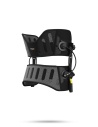
Mover with Hapo BACK exoskeleton

Why does the price of an exoskeleton vary so much?

The term "exoskeleton" covers very different realities. Between a simple assistance device and a professional equipment designed for daily use in a company, the differences in design, performance, and safety explain significant price differences.

An exoskeleton intended for the professional world is not an accessory. It is part of a comprehensive approach to improving working conditions, complementing other ergonomic and organizational actions.

Its price therefore reflects:

  • The quality of materials
  • The mechanical reliability
  • The adaptability to different users
  • The relevance of the device in the face of field constraints

The main factors that influence the price of an exoskeleton

The type of exoskeleton: passive or active

  • Passive or non-motorized exoskeleton:
    operates without a motor, it returns the mechanical energy produced by the user's movements. Indicative price range: from €500 to €4,000, depending on the manufacturers and the assisted area.
  • Active or motorized exoskeleton:
    integrates motorized or electronic systems, it offers more powerful assistance but involves additional constraints (maintenance, autonomy, weight). It is often designed for specific uses (heavy industry, medical rehabilitation). Indicative price range: from €4,000 to over €15,000, depending on the embedded technology and intended use.

The assisted body area

The price strongly depends on the constraints to be targeted:

  • Back and lower back (handling, carrying loads, repeated bending of the torso)
  • Shoulders and arms (working with arms raised or in front of you)
  • Neck (working with head and gaze upwards)
  • Legs (skiing, hiking, moving around)

The more complex the biomechanics, the higher the level of engineering required, which directly impacts the cost.

Professional use and intensity of use

An exoskeleton can be designed for:

  • Occasional or leisure use
  • Or for daily professional use, several hours a day

These uses do not meet the same requirements for robustness, comfort, and adjustment. Professional solutions intended for logistics, industry, construction, craftsmanship, or the healthcare sector are designed to withstand real field conditions, which is reflected in their price.

The level of adjustment and adaptation to users

A truly usable exoskeleton in a company must be able to:

  • Adapt to different body types
  • Be adjusted and set up quickly
  • Be shareable among multiple users if necessary
  • Preserve freedom of movement and precision of gestures
  • Not negatively impact the work pace

This adaptability, essential for sustainable adoption, directly influences the price range.

Compliance, safety, and efficiency

Exoskeletons intended for professional environments must meet strict requirements in terms of safety, reliability, and compatibility with workplace constraints. In particular, the CE machine certification ensures compliance with safety requirements.

At HAPO, the effectiveness of certain exoskeleton models is evaluated notably through the measurement of the reduction in muscular effort (study to read for Hapo BACK)

These elements, often invisible at first glance, strongly contribute to the pricing positioning.

Support and monitoring

The price of an exoskeleton is not limited to the product. The support may include:

  • Analysis of the workstation
  • Testing in real conditions
  • Training for users
  • A period of adjustments after deployment

This aspect of consulting and support is crucial for the proper acceptance of the exoskeleton by users, and thus the success of the project.

What budget should you plan according to your activity?

For information purposes, and depending on options and usage, the Hapo rates observed in 2026 fall within the following ranges:

Health and care:
between €1,800 and €3,500 for a Hapo exoskeleton for the back or arms.

Logistics and handling:
between €500 and €3,000 for a Hapo exoskeleton for the neck or back.

Industry and production:
between €1,800 and €3,500 for a Hapo exoskeleton for the back or arms.

Construction and Craftsmanship:
between €500 and €3,500 for a Hapo exoskeleton for the neck or back.

Agriculture and agri-food:
between €1,800 and €3,500 for a Hapo exoskeleton for the back or arms.

Services and craftsmanship:
between €1,800 and €3,500 for a Hapo exoskeleton for the back or arms.

Exoskeleton: a cost or an investment?

For a decision-maker, the central question is not only the price but the value created in the long term. A well-chosen exoskeleton can:

  • Contribute to limiting physical wear related to work constraints
  • Improve comfort in demanding positions
  • In certain documented industrial contexts, companies have observed a reduction in injuries related to repetitive motions and an improvement in efficiency in specific positions (example of Ford and the industrial sector)
  • Retain employees, reduce turnover
  • Engage in a global approach to prevention and quality of work life
  • Enable the retention in employment of people with RQTH (example in a hospital center)

It does not replace work organization or other prevention actions, but serves as a complementary tool, relevant when integrated coherently.

In this perspective, the exoskeleton is often considered as a work support lever rather than an isolated expense.

Why avoid choosing an exoskeleton based solely on price

A choice based solely on price carries several risks:

  • Mismatch with the actual position
  • Low adoption rate by teams
  • Abandonment of the device after a few weeks
  • Negative perception of the approach by users

The challenge is therefore less about finding "the cheapest exoskeleton" than the most beneficial exoskeleton, both for the users and for the company.

HAPO exoskeletons: a range designed for professional use

The HAPO exoskeleton range has been designed to meet specific professional uses,
with solutions adapted to different professions and constraints.

Each model addresses a specific issue (load carrying, working with arms raised or in front, prolonged or repetitive constrained postures)
and is part of a structured approach to improving working conditions.

The product sheets provide detailed information on uses, application contexts, and expected benefits to facilitate an informed decision-making process.

Being accompanied to choose the right exoskeleton at the right price

The choice of a professional exoskeleton should never be made without prior analysis. Being accompanied allows you to:

  • Validate the relevance of the device
  • Test the solutions
  • Secure the investment
  • Maximize user acceptance

This approach is particularly relevant for companies, HR, QHSE services, and leaders wishing to engage in a sustainable and responsible approach.

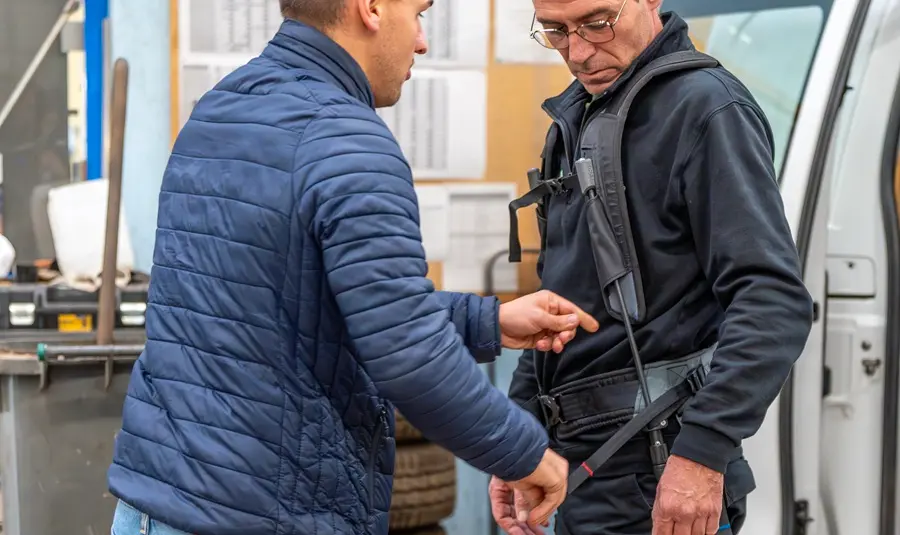
Advisor Hapo and his client

FAQ - Exoskeleton and Price

What is the price of a professional exoskeleton?

The price of a professional exoskeleton generally ranges from €500 to over €15,000. This range depends on the type of assistance (passive or motorized), the area of the body concerned, the intended use, and the level of support offered.

Why do exoskeleton prices vary so much?

The price differences are explained by significant differences in design, durability, safety, adaptability to users, and context of use. An exoskeleton designed for daily professional use does not meet the same requirements as a simpler or occasional device.

Is an exoskeleton suitable for all companies?

An exoskeleton is not relevant in all situations. Its usefulness depends on the workstation, the actual physical constraints, and the organization of the activity. A preliminary analysis is essential to determine if this solution is suitable.

Can an exoskeleton help reduce musculoskeletal disorders (MSDs)?

An exoskeleton is not a standalone solution for MSDs. When well-chosen and integrated into a comprehensive approach, it can help limit certain physical constraints and improve comfort in specific roles, complementing other preventive actions.

How to choose an exoskeleton suited to your budget and activity?

The choice of an exoskeleton should always start with an analysis of the workstation and actual usage. Being accompanied by an expert allows for testing solutions, securing the investment, and maximizing acceptance by employees and operators.