Exoskeleton for construction jobs

Relieve the burden, prevent injuries

Exoskeleton for construction jobs

Relieve the burden, prevent injuries

This comprehensive file offers you a concrete, useful, and unfiltered look at the use of exoskeletons in construction.

You will find:

Feedback from professionals like you.

A clear presentation of the benefits of an arm, back, or shoulder exoskeleton.

Answers to legitimate concerns: cost, discomfort, collective adoption.

Insights into scientific evidence and ergonomic validations.

And above all, a promise: no longer sacrificing health in the name of performance.

The building industry is all about muscle and precision. The body works every day on construction sites that are more or less demanding, but always intense.

For construction professionals—whether they are workers, team leaders, site managers, or independent craftsmen—muscle fatigue is not just a simple discomfort. It becomes a daily reality, a hindrance to productivity, and even a long-term health threat. Lower back pain, shoulder tendinitis, neck tension: these musculoskeletal disorders (MSDs) are not inevitable... yet they remain the leading cause of work stoppage in manual trades.

At Hapo, we understand your constraints. We have spent time on construction sites, talked with masons, observed drywall installers raising their arms for hours on end, and listened to workers who, at 45, already suffer as if they were 60. We have understood one simple thing: the professional gesture deserves an ally. This ally is the exoskeleton.

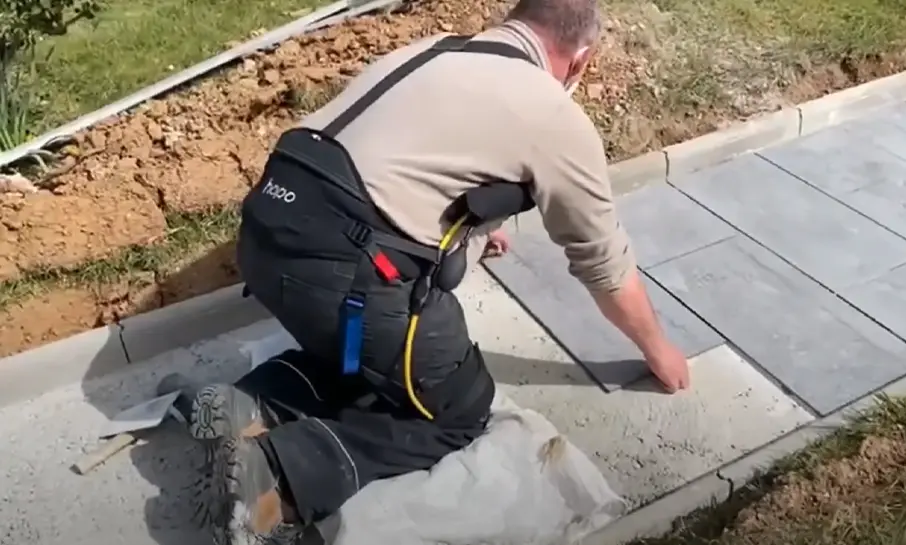
Tiler on their knees laying a tile

The exoskeleton is not a gadget.

It is a physical assistance device (PAD), designed to reduce muscle effort and prevent body wear. And above all, it is a mature, concrete solution, already used in construction — whether in structural work, finishing work, in renovation as well as in new construction.

"I think it's something that can help, especially for those who have back problems, or to prevent and not have any!"

Laurent, Tiler,
about his exoskeleton

? Mini-quiz

In your opinion, what proportion of occupational diseases in the construction industry are due to MSDs?

A. 27%
B. 57%
C. 87%

Answer

C. 87% of occupational diseases in the construction industry are related to musculoskeletal disorders (source: prevention btp )

Why adopt an exoskeleton in construction today?

In the construction trades, the body is the main tool. It is much more so than any machine or technology. However, by constantly using the same muscles, the same joints, in the same strenuous postures, the risk of injury becomes inevitable. This is where the exoskeleton comes into play: not to replace, but to relieve and support.

Every construction professional knows it: the reality on the ground involves days of repeating the same efforts. Lifting panels to the ceiling, smoothing a wall at arm's length, placing heavy elements at height, screwing with an outstretched shoulder... These mundane actions wear out the body, silently.

Zoom: Physical Constraints by Profession

Mason bent over to pick up a tool

Mason

Curved back, carrying heavy loads, vibrations.

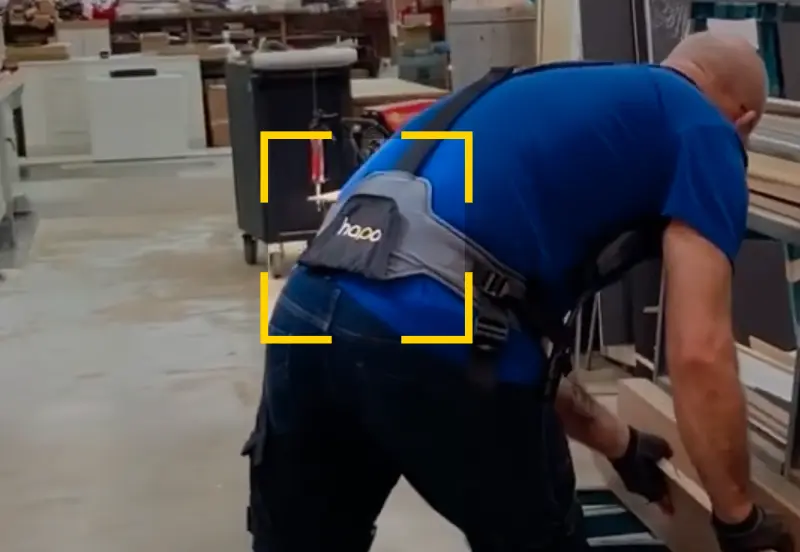
Worker with their back turned holding a tool at arm's length

Drywall installer

Arms in the air for entire hours.

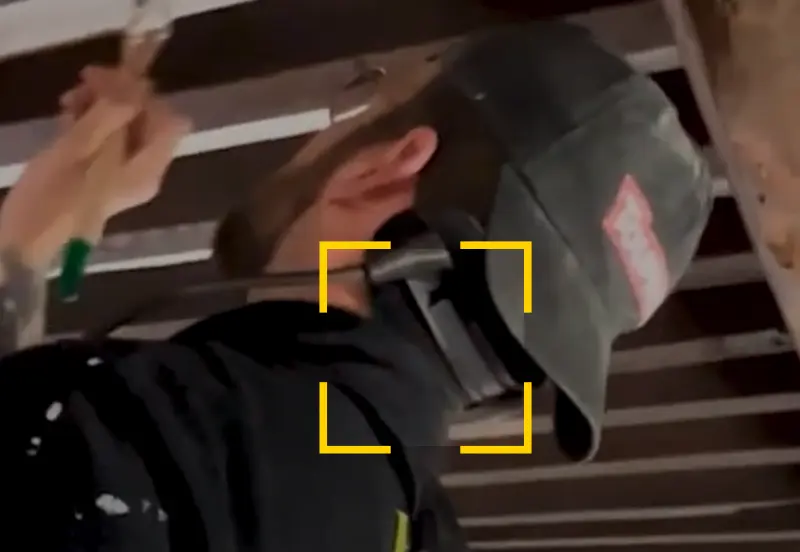
Painter working on a ceiling

Painter

Prolonged work with head up, strong strain on the cervical spine.

Tiler on their knees

Tiler

Work on knees, bent back, repetitive movements.

Woodworker

Team leader

Older, often with muscular or joint aftereffects.

The striking figure:

73% of construction workers report experiencing back pain related to daily physical work.
(Source: OPPBTP 2024 MSD prevention campaign)

The exoskeleton for construction addresses a silent urgency.

What are known as MSDs (musculoskeletal disorders) represent a major health issue in the construction industry.

They are responsible for:

- more than 8 out of 10 occupational diseases in the sector,
- 2 million lost workdays each year,
- a cost of 186 million euros per year for occupational diseases and work accidents,
- 45% of unfitness cases pronounced by occupational health services.
(source: prevention btp).

By reducing the mechanical load on certain areas (muscles of the arms, shoulders, back, as well as joints and tendons), exoskeletons help to alleviate pain, delay wear, and extend the ability to perform manual work.

Those who have tried it testify

As part of our support for craftsmen and construction workers, we observe every day the relevance of the exoskeleton for these professions:

Testimonial from Stéphane, Carpenter:

"It's very, very good, it helps to always have a good posture, it helps when you want to get up and you're carrying a panel…"

In an environment as demanding as construction, it is not about imposing an innovation, but finding solutions that fit the reality on the ground.

The exoskeleton is today a complementary tool, just like PPE or hearing protection: equipment that preserves the professional without altering their performance.

What are the tangible benefits of a passive exoskeleton?

If the word "exoskeleton" sometimes evokes an image of science fiction or futuristic high technology, the reality is much more accessible — and pragmatic. In the construction sector, what matters above all is comfort, efficiency, and safety. Passive exoskeletons have been designed precisely for this: to relieve the most stressed areas of the body without complicating movements or slowing down the pace of the site.

A passive exoskeleton is a device without a motor or electronic assistance. It operates solely through load transfer, using springs, mechanical arms, or tensioned bands that follow the user's movement.
Result: less strain on the shoulders, back, or arms, and a better distribution of effort.

On the ground, immediate benefits

Less muscle fatigue

The reduction in muscular effort can reach 30 to 40% depending on the movements. (read the scientific study from Hapo FRONT)

Prevention
of MSDs

particularly on areas with high demand (lower back, shoulders), by reducing strain on the muscles, as well as the joints, tendons, and ligaments.

Maintaining
productivity

Users work longer without losing concentration.

Quick
adoption

The lightness and simplicity of passive exoskeletons facilitate their integration into a team.

A 2023 study showed that using a passive exoskeleton for the shoulders can reduce anterior deltoid muscle activity by up to 39% and upper trapezius muscle activity by up to 60%. This translates into a lower perceived effort when carrying loads. (Read the scientific study)

Adapted to a wide variety of gestures

A good exoskeleton is not designed for just one profession. It must address a specific type of movement, regardless of the profession.
Hapo thus offers models:

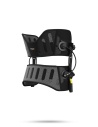
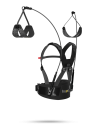
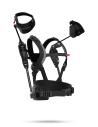
- for 'arms in the air' work (drywaller, painter, ceiling installer), with Hapo UP

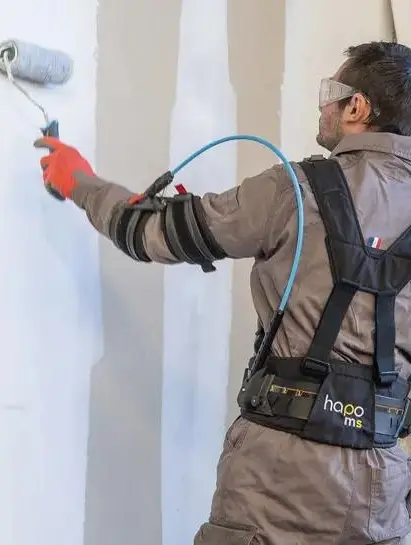
- for repetitive 'arms in front' tasks (painter), with Hapo FRONT

- for handling and carrying heavy loads (mason, tiler, handler), with Hapo baCK, SD or CS

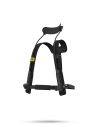
- for 'head up' postures (painter), with Hapo NECK

Real example

Jean Christophe, a cabinetmaker, equipped himself with an exoskeleton following a backache.

What he gains from it:

- With the exoskeleton, he benefits from physical assistance as he resumes his activity
- Relief for his lower back
- A comfortable and reliable piece of equipment because there is no electronics or complicated operation.

The passive exoskeleton is a simple, robust, and effective field solution. It supports the professional without constraining them, improves comfort, and contributes to the physical longevity of the teams.

A smoother movement today means a healthier body tomorrow.

The most common barriers to usage... and how to overcome them

When discussing exoskeletons on a construction site, the initial reaction is not always immediate enthusiasm. However, every time we have had the opportunity to support the integration of an exoskeleton, these hesitations have given way to gradual — often enthusiastic — adoption.

Here is an overview of the most common obstacles, and the concrete solutions we provide at Hapo.

"C'est trop encombrant, je ne pourrai plus bouger"

It's a common misconception. Some still imagine an exoskeleton as a rigid, metallic, constraining harness. However, the latest generation of passive exoskeletons, like those offered by Hapo, are designed not to hinder movement. Flexibility, adjustment, lightweight materials: everything is designed to adapt to the body and professional movements.

Note: Hapo models weigh on average between 1.5 kg and 3 kg, equivalent to a small portable power tool.

"C'est trop compliqué à mettre en place"

This is a crucial point: team adoption. That's why at Hapo, we systematically offer:

- ergonomic support to identify the positions and movements to equip.

- a quick training for handling (30 minutes),

- a testing phase on site, under real conditions

The key is to involve the end users, not to impose a tool from above.

An example of feedback:

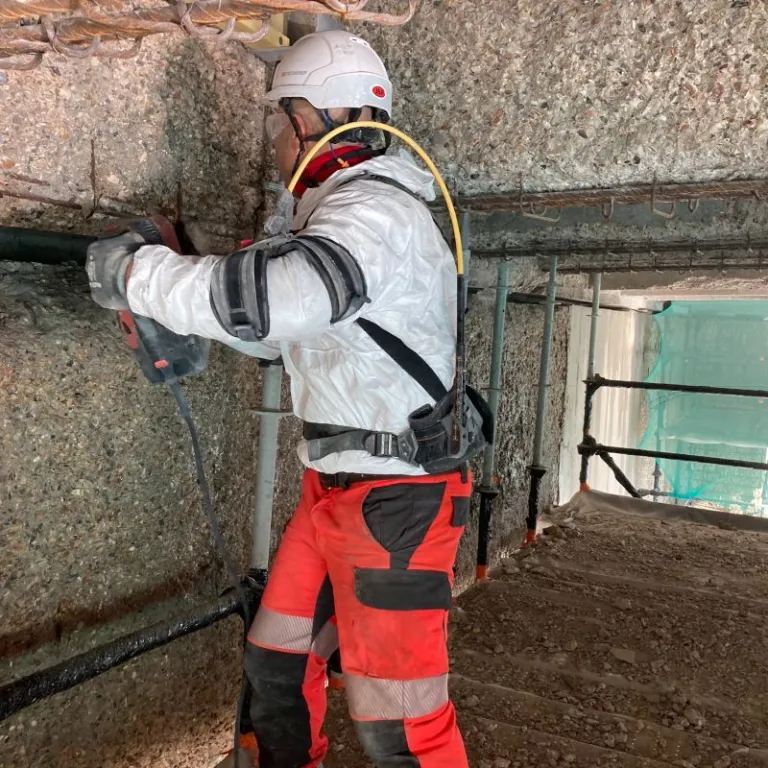
With the aim of reducing muscle tension, minimizing occupational risks, and increasing efficiency on sites, TECHNIREP (specialist in reinforcement, repair, and protection of civil engineering structures and infrastructures) began testing exoskeletons provided by HAPO in 2023. The positive results of these tests have encouraged a strong collaboration between the two companies. Today, the use of these physical assistance devices is increasing on TECHNIREP's sites.

Worker with a drill on a wall

"C'est trop cher pour notre structure"

The price of an exoskeleton for construction may seem high at first glance. On average, expect to pay between €550 and €3,300 excluding tax depending on the model (2025 prices) and options. However, this figure should be put into perspective with the costs generated by an MSD for the company in the event of an occupational disease or work accident:

Direct costs:

- increase in AT (Work Accident) and MP (Occupational Diseases) contributions due to Health Insurance

- possible compensation paid to the employee

- costs for adapting the workstation

- cost of time spent managing the employee's sick leave file

Indirect costs, more difficult to estimate but real:

- management of turnover and absences

- dysfunction in the organization of the company's activities

- decrease in productivity

According to ANACT (National Agency for the Improvement of Working Conditions), indirect costs are estimated to be 2 to 5 times higher than direct costs.

For a company, the direct cost of an MSD in the event of an occupational disease is estimated at €21,000 in 2019 (source: ANACT)

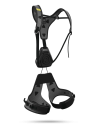
"Les gars vont se moquer, ce n'est pas dans la culture chantier"

A worker arriving with an exoskeleton on their back? It might make people smile at first. And yet, usage creates acceptance.

What we observe is that in a few days:

- comfort outweighs the mockery,

- operators without one ask to try it,

- a user's posture changes, gaining confidence.

Common MisconceptionField Reality Hapo
"It will hinder my movement"Freedom of movement preserved
"It's a marketing gimmick"Scientifically proven reduction of muscular effort
"I'll look like a robot"Simple and discreet design, integrated under PPE
It won't last a dayExtended wear tested for several hours without breakage and discomfort

To avoid obstacles, some QSE managers integrate exoskeletons into a participatory approach: test group, collective evaluation, anonymous feedback. Acceptance is always better when teams are involved from the start.

In summary: yes, there can be obstacles. But they are all surmountable, provided there is personalized support, testing time, and above all, a real understanding of business realities. And that's what we do at Hapo, every day.

Price, financing, and return on investment

The cost of an exoskeleton is often seen as a barrier, particularly in small and medium-sized enterprises in the construction sector. And yet, in our view, it is one of the most profitable investments in terms of health prevention and sustainable performance. It is not just a purchase, but a strategy for risk reduction and productivity optimization.

What is the price of an exoskeleton for construction?

A professional exoskeleton for construction costs on average between €550 and €3,300 excluding tax (2025 prices), depending on the technology, targeted body areas (back, shoulders, arms, neck), and adjustment options.

The most affordable models (passive exoskeletons for the neck) are priced around €550 excluding tax (Hapo NECK) to €1,799 excluding tax for back exoskeletons (Hapo SD).

Compared to the cost of a work-related illness...

As mentioned earlier, an MSD leading to an occupational disease represents a direct cost for the company estimated at €21,000. For the entire construction sector, this amounts to €186 million. And 91% of occupational diseases in construction are related to MSDs. (source: Ameli).

We know that an exoskeleton can:

- Help prevent MSDs, and consequently limit the occurrence of occupational diseases,
- Reduce the difficulty without changing construction site processes,
- Retain workers by taking care of them.

In summary: a construction exoskeleton is not a luxury. It is a profitable tool. And in a prevention logic, each month saved on an avoided stoppage pays back the investment.

Painter equipped with the Hapo FRONT

The different types of professional exoskeletons

There is not just one exoskeleton, but multiple exoskeletons, each designed to meet specific physical constraints: relieving the arms, protecting the back, assisting with repetitive movements, or maintaining a prolonged posture. In the construction sector, the needs vary greatly depending on the tasks. This is why it is essential to choose the right model, suited to the actual effort exerted.

Three major families of construction exoskeletons

1- Exoskeletons for arms and shoulders:

Ideal for overhead work, extended or repetitive arm tasks: ceiling installation, painting, drilling, screwing.

2- Back exoskeletons:

Designed for tasks requiring lifting loads or bent positions: masonry, tiling, handling.

3- Exoskeletons for the Neck:

Designed for "head-up" tasks such as ceiling painting, high-level screwing/drilling, etc...

Comparative table of the main types of exoskeletons for construction trades

Targeted AreaJob ExampleType of ExoskeletonMain ObjectiveExample Model HapoIndicative Price
Shoulders / ArmsDrywaller, painterPassiveRelieve the arms in 'in front of you' or 'overhead' positionHapo FRONT or Hapo UP~2,599€ to 3,300€
Back / Lower BackMason, tiler, laborerPassiveReduce strain on the backHapo BACK or Hapo SD
~1,799€ to 1,999€
NeckPainterPassiveReduce tension on the neckHapo NECK~550€

Note: Rehabilitation exoskeletons are complex, motorized medical devices that have nothing to do with passive construction exoskeletons. They are neither suitable nor necessary on construction sites.

Passive or active?

In the construction industry, passive exoskeletons are widely favored for 3 simple reasons:

- They are lighter.

- They do not require batteries or recharging, so they have total autonomy.

- They are cheaper and easier to maintain.

Pro Tip

Before choosing a model, we conduct a field diagnosis. This helps determine the user's effort profile, the frequency of movements, and compatibility with current equipment.

To get an initial idea of the exoskeleton model that might suit you, we have designed an online diagnosis:

Field testimony

“When I saw the other videos, I thought: ‘What is this thing? It's going to bother me! And actually, I feel good! [...] It's true that it helps a lot. So you might say: ‘What, 1500€?’ Well, I prefer to preserve my health by spending 1500€! So for me, it's adopted.”

Stéphane, painter.

In conclusion, the right exoskeleton is the one that adapts to the job, not the other way around. Thanks to our Hapo range adapted to construction, you have concrete tools, tested in the field, without unnecessary complexity. And if in doubt, we always offer a real-world conditions test, without commitment.

What science says: state of knowledge and publications on exoskeletons

Non-motorized professional exoskeletons, once reserved for laboratories, are now the subject of scientific studies aimed at evaluating their impact on muscle strain and user experience.

Here is a review of scientific studies to know if you are considering integrating an exoskeleton on your worksites.

Significant reduction in back muscle activity

A study concerning Hapo BACK highlighted an 18% reduction in the strain on back muscles (longissimus and latissimus dorsi) when using it during a handling task (lifting a 6kg load).

Moreover, the discomfort perceived by the user in their legs and back decreases when wearing the exoskeleton.

Read the full study.

Reduction of shoulder load and comfort of use

A study was conducted in 2024 with the Hapo FRONT exoskeleton during workers' daily tasks:
- Laying gas pipes
- Packing and unpacking materials
The results show a decrease in muscle activity in the trapezius and deltoid muscles. Most participants reported that the exoskeleton was easy to put on and comfortable.

Read the full study.

Conclusion

These studies converge towards a clear finding:

- Passive exoskeletons significantly reduce the activity of the engaged muscles (shoulder, back)

- They provide a gain in comfort, a reduction in perceived pain, while maintaining the quality or pace of work.

Why choose a French exoskeleton like Hapo?

Today, several brands offer exoskeletons for professional use. Some come from large international groups, others from industrial or medical initiatives. But in this landscape, Hapo stands out as an exception: a French company focused on the field, ease of use, and concrete impact for construction professionals.

And it's not just a matter of industrial patriotism. It's a logic of efficiency, proximity, and expertise.

An exoskeleton designed in France for physical jobs

At Hapo, our mission is clear: to relieve the body without ever hindering the craft. It is by starting from the daily actions of a mason, a plasterer, a tiler, or a renovation worker that we developed our models.

Not only in the laboratory or in the design office. But also in the field, with those who know what it means to carry, lift, and repeat.

An exoskeleton designed to be worn... without constraints

Our models are:

- Ultra-light: less than 2 kg

- No motor, no battery: 0 maintenance constraints, 100% autonomous

- Compatible with your PPE and work clothes

- Adjustable in a few minutes: even with gloves and on site

This is what we call a ready-to-use, robust solution but invisible in practice.

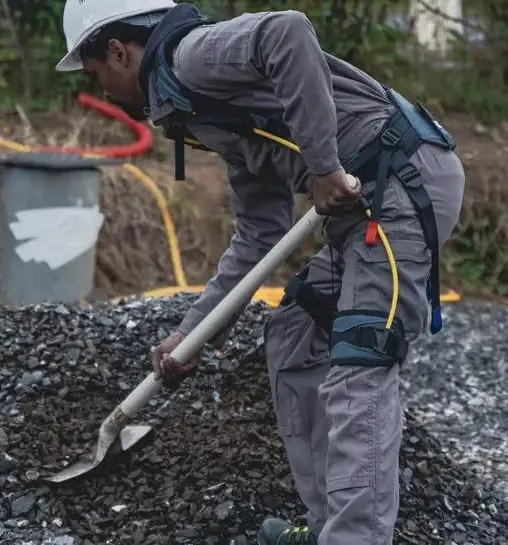
Mason moving gravel with a shovel

The Hapo service: on-the-ground support

A good exoskeleton is worthless without smart implementation.
That's why our support includes:

- An analysis of your work gestures,

- A testing phase on site (without commitment),

- After-sales service in France, with spare parts available.

Simplified maintenance

No engine, no electronics = less risk of breakdown. The wear parts (straps, supports, foams, springs) are replaceable individually.

A human connection, not just customer support

We are not a catalog. We are a team of technicians, advisors, and ergonomics experts who support you in your prevention efforts. And most importantly: we speak your language. The language of the field, logistical constraints, and budgetary realities.

An innovation manufactured and tested in France

- Design, production, and assembly in Occitanie

- Collaboration with French ergonomists

- Internal ISO 9001 quality monitoring

- Participation in research projects

The result: short lead times, reachable contacts, customization capability, and the guarantee that every euro invested supports a committed local industry.

FAQ - Construction Exoskeletons: Your Frequently Asked Questions

What is the price of an exoskeleton for construction?

The price of a Hapo exoskeleton intended for construction generally ranges between €550 and €3300 excluding tax (2025 rates), depending on the model and the areas of the body to be relieved (back, shoulders, arms, neck). Passive exoskeletons like those from Hapo are more financially accessible than motorized models, while being perfectly suited for construction sites.

What are the risks of exoskeletons?

An improperly fitted or misused exoskeleton can cause discomfort, poor distribution of effort, or a false sense of security. However, well-adjusted passive models accompanied by training pose no danger.

What are the different types of exoskeletons?

They are mainly distinguished as:

- Passive exoskeletons (without motors), lightweight, autonomous, used as an aid for the prevention of MSDs

- Active exoskeletons (motorized), heavier, used in industry or rehabilitation

- Medical exoskeletons, reserved for rehabilitation or people with disabilities.

In construction, passive models are the most relevant.

What if it was the right time to test a construction exoskeleton?

You have read the studies. You have seen the numbers. You have heard the testimonials.

So why wait?

Every day on the construction site is a challenge for your body, or that of your teams. And if a simple piece of equipment could reduce pain, prevent injuries, and extend the professional lifespan of your employees... wouldn't it be worth trying?

At Hapo, we believe in innovation that is simple, useful, and above all human.


No empty marketing promises.


No unnecessary robotization.


Just a lightweight, discreet, effective exoskeleton, designed by and for construction professionals.

Are you a safety officer, craftsman, QSE manager, or team leader?

Take the first step. Your shoulders, your back, and your colleagues will thank you.

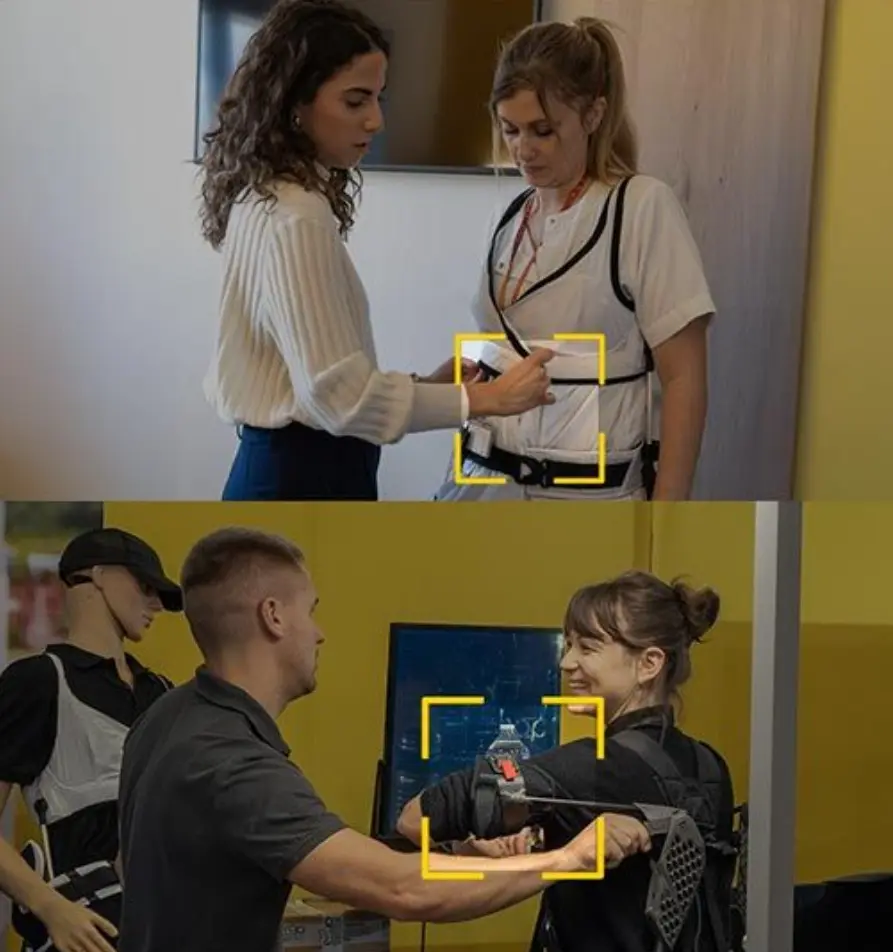
Advisors Hapo with their clients