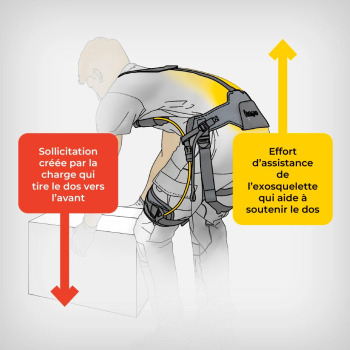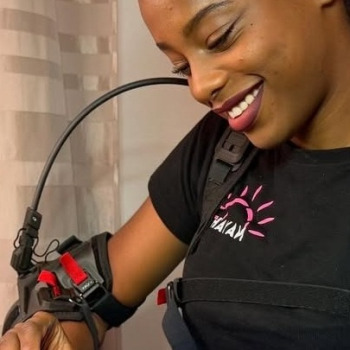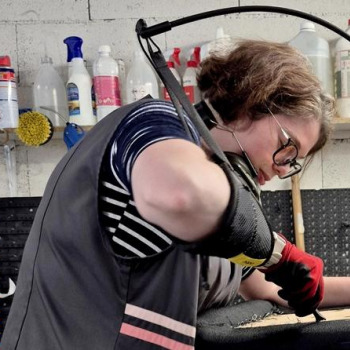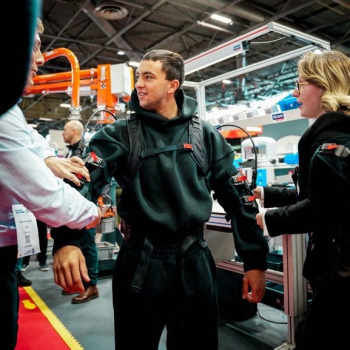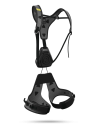
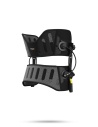
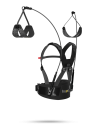
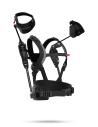
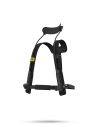
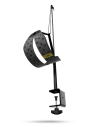
Rotator cuff injuries are a musculoskeletal disorder (MSD) as well as a leading cause of shoulder pain, significantly impacting the mobility and quality of life for those affected. These injuries primarily affect workers who perform repetitive movements or heavily engage their shoulders, such as those in industries like manufacturing, construction, or healthcare. The rotator cuff consists of four muscles and their tendons that surround the shoulder joint, playing a vital role in shoulder stability and mobility. It enables a wide range of movements, including lifting, rotating, and holding the arm in position. Injuries can range from inflammation (tendinitis) to partial or complete tendon tears, often resulting from overuse and repetitive motions. Although muscle strengthening, proper movement training, and ergonomic adjustments are recommended to reduce the risk of rotator cuff injuries, they may not always be enough. Upper limb exoskeletons designed for the shoulders and arms offer an effective solution to prevent or mitigate these injuries. Specifically engineered to redistribute weight and load to the hips and legs, they provide:
Effort reduction
by supporting the arms during repetitive movements
Posture improvement
which allows for a reduction in strain and tension
Muscle fatigue reduction
by decreasing the strain on shoulder muscles
Hapo has developed a range of exoskeletons specifically designed to target and support the body parts most affected by musculoskeletal disorders, including the shoulders, back, and neck. These solutions are focused on preventing muscle pain and reducing the risk of MSDs like rotator cuff injuries.

Physically demanding tasks where arms are extended overhead or in front of the body

Constraining posture and risks related to carrying heavy loads and repetitive movements
The cleaning and assembly line jobs are primarily concerned
298
average days of work stoppage
per year*
€52,000
the most costly MSD
in terms of work stoppage
The longest downtime among MSDs.
*Source: occupational diseases fund 2016
HAPO exoskeletons are exclusively non-motorized ("passive") exoskeletons. They are distinguished by a human-centered approach and advanced technology to maximize their performance and user comfort. They help reduce strain and fatigue by relieving the body during repetitive movements and strenuous postures, which can reduce the risk or onset of rotator cuff injuries. The Hapo technological difference is based on:
The Hapo difference is based on:
- An unmatched efficiency/comfort ratio thanks to springs that combine lightness with a high capacity for energy storage and assistance.
- Adaptable elasticity to reduce muscle strain while maintaining freedom of movement.
- Maximized comfort due to the adaptability of the exoskeleton, which perfectly fits the body and its movements.
In less than 5 minutes, assess your situation and discover our recommendations
and the Hapo exoskeleton that suits your needs.
-
Poor postures + Poor movements = high risk of body wear at work. In one click, for free and in complete confidentiality, detect and analyze your postural risks with Hapo LEA.
In less than 5 minutes, assess your situation and discover our recommendations and the Hapo exoskeleton that suits your needs.

Poor postures + Poor movements = high risk of body wear at work. In one click, for free and in complete confidentiality, detect and analyze your postural risks with Hapo LEA.
First presented on October 14th...
Read moreWe have launched a new version…
Read moreA scientific study recently demonstrated...
Read moreThe prevention of musculoskeletal disorders (MSDs) is a major challenge in the healthcare sector...
Read more