Exoskeletons in occupational health: why, for whom, and how to integrate them?

Exoskeletons in occupational health: why, for whom, and how to integrate them?

Musculoskeletal disorders (MSDs) remain a major occupational health issue today. Despite decades of research and prevention, their prevalence and human, organizational, and economic impact remain significant. In this context, professional exoskeletons are generating increasing interest. What can they really offer? Under what conditions? And for which workers?

A look back at the key insights from the webinar hosted by the scientific team Hapo, dedicated to occupational health professionals.

MSDs: An Ongoing Issue

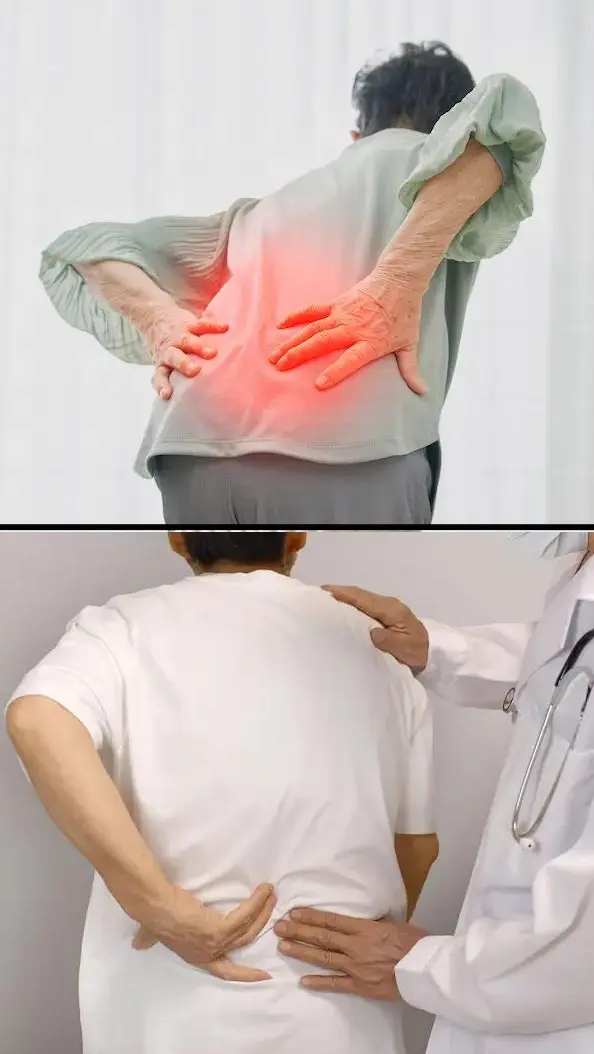
Musculoskeletal disorders are defined as diseases affecting the joints, muscles, and tendons, which can be promoted by professional activity, leading to their onset, persistence, or worsening.

A multifactorial origin

MSDs result from a combination of factors:

  • Individual factors: age, gender, BMI, level of physical activity, alcohol consumption…
  • Psychosocial factors: anxiety, lack of autonomy or recognition, deficit of social or hierarchical support, harassment…
  • Organizational factors: monotonous work, short cycles, lack of recovery time, insufficient resources…
  • Physical and biomechanical factors: carrying heavy loads, repetitive movements, constraining postures, static work, vibrations.

This complexity explains why no single solution can, by itself, prevent all MSDs.

Heavy impacts for employees and businesses

The consequences of MSDs are significant:

For employees: chronic pain, functional sequelae, unfitness, job loss, family and social repercussions.

For companies:

  • Direct costs (Health Insurance contributions)
  • Indirect costs: absenteeism, decreased productivity, production delays, turnover, deterioration of employer image.

Some key figures:

  • MSDs account for 88% of occupational diseases
  • Their direct cost is estimated at 2 billion euros per year
  • 22 million workdays lost each year
  • Low back pain alone generates more than 1 billion euros in direct costs and 11.5 million workdays lost per year

Exoskeletons: What are we really talking about?

What they are not

  • Futuristic robotic systems
  • A miracle solution to all MSDs
  • A way to increase strength or productivity without limits
  • An "off-the-shelf" solution usable without adaptation

What they really are

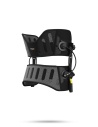
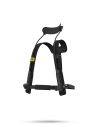
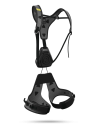
Professional exoskeletons are physical assistance devices (PAD), most often passive and non-motorized, aimed at:

  • Reducing excessive efforts
  • Decreasing biomechanical constraints
  • Improving work postures

They do not eliminate MSDs related to the repetitiveness of movements, but they act on certain risk factors, particularly biomechanical ones.

For whom and for which work situations?

Back pain is not related to a specific profession, but to:

  • Constrained postures
  • Lifting loads

Furthermore, more than 40% of occupational diseases affect the neck and upper limbs,
which justifies the interest in exoskeletons for the back as well as for the shoulders and arms.

How do passive exoskeletons work?

On the upper limbs

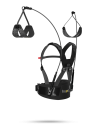
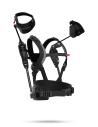
Arm exoskeletons allow for:

  • A reduction in the weight of the upper appendicular apparatus
  • A decrease in the strain on the shoulder girdle and rotator cuff
  • A reduction in the myoelectric activity of certain shoulder muscles by 40 to 60%, depending on the tasks

On the lumbar spine

During trunk flexion:

  • Without exoskeleton: high demand on spinal muscles and increased intradiscal pressure
  • With exoskeleton: reduced work of spinal muscles and decreased stress on intervertebral discs and posterior joints

The mechanism is based on:

  • Lightening the weight of the trunk
  • Working against resistance of the agonist muscles (abdominals), reducing the activity of the antagonists
  • Releasing stored energy during straightening

Interests and limitations identified by the scientific literature

Observed benefits

  • Decrease of 10 to 60% in lumbar muscle activity
  • Reduction in perceived lower back pain
  • Reduction in muscle fatigue during prolonged tasks
  • Increase in endurance time for postural maintenance

Limits and questions

  • Modification of movement strategies
  • Potential impact on balance and locomotion
  • Risk of muscle compensations on other segments
  • Lack of consensus on the direct reduction of MSD risk

The webinar emphasizes that reducing muscle activity alone is not sufficient to conclude a decrease in MSD risk.

An integration that must be part of a global approach

As reminded by the INRS, the exoskeleton can only be considered after exhausting collective prevention actions and must be integrated into a comprehensive approach to preventing MSDs (Musculoskeletal Disorders).

The standard NF X35-800 defines a framework of acceptability, including:

  • Suitability to the need
  • No hindrance to movement
  • Comfort and lightness
  • Ease of use
  • Reliability, safety, and durability
  • Time for training and appropriation

Exoskeletons Hapo: a human-centered approach

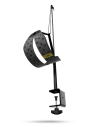
Hapo develops non-motorized exoskeletons designed to promote user acceptance:

  • Weight of about 1 kg
  • Balance between efficiency and comfort
  • Simple and intuitive adjustments
  • Composite springs with high energy storage capacity
  • Affordable pricing

What return on investment?

The expected benefits are of various kinds:

Reduction of MSDs and work stoppages

Preservation of performance and work quality

Maintaining expertise and employability

Improvement of working conditions

Enhancement of employer branding

On a large scale, some data from literature and feedback (notably cited by the EY Megatrends study) mention:

  • A reduction of 20 to 60% in workplace accidents
  • An increase in productivity of 15 to 25%

Conclusion: a promising solution, but not isolated

Can we hope for a decrease in the prevalence of MSDs by simply reducing muscle activity?

The webinar provides a nuanced answer: since MSDs are multifactorial, the exoskeleton acts on one lever among others.

User feedback, studies in real conditions, and integration into a comprehensive prevention approach remain crucial for evaluating their long-term relevance.

Contact one of our experts

Our teams are at your disposal to assess your needs and organize real-life tests to allow your employees to experience the benefits of exoskeletons in their work environment.

Contact one of our experts

Our teams are at your disposal to assess your needs and organize real-life tests to allow your employees to experience the benefits of Hapo exoskeletons in their work environment.