Lynbond tests Hapo CS in the warehouse to improve working conditions.

Lynbond tests Hapo CS in the warehouse to improve working conditions.

How to reduce physical fatigue related to warehouse handling operations? In the UK, the company Lynbond is experimenting with the passive exoskeleton Hapo CS with its logistics teams. Deployed with the support of Stanley, HAPO's distributor, this device aims to facilitate certain handling tasks, improve postural comfort, and limit strain on the back. The initial feedback is encouraging.

Lynbond: a prevention approach for MSDs in logistics.

Logistics jobs expose employees to repeated physical constraints. Order preparation, handling goods, loading and unloading: all situations that may require frequent bending of the torso and significant muscle effort.

These demands can contribute to the onset of musculoskeletal disorders (MSDs), particularly in the back.

Aware of these issues, the British company Lynbond has decided to experiment with a new ergonomic solution in its warehouses: the Hapo CS exoskeleton.

This initiative is part of a broader approach aimed at improving the safety, well-being, and working conditions of its employees.

Why did Lynbond choose to experiment with Hapo CS?

The goal of Lynbond is to support its employees in handling tasks that regularly strain the back.

To achieve this, the company has equipped itself with the Hapo CS to provide physical assistance during certain upper body movements.

Unlike a motorized device, the Hapo CS does not require a battery or electrical power. Its mechanical assistance system supports the user's movements, particularly during bending and straightening of the upper body.

Its goal is to help reduce muscular effort in the lumbar region while maintaining the mobility necessary for professional activities.

In a logistics environment, this assistance can be beneficial for positions involving repeated bending or handling operations performed at different heights.

However, the suitability of the exoskeleton depends on the tasks performed and the specific constraints of each position.

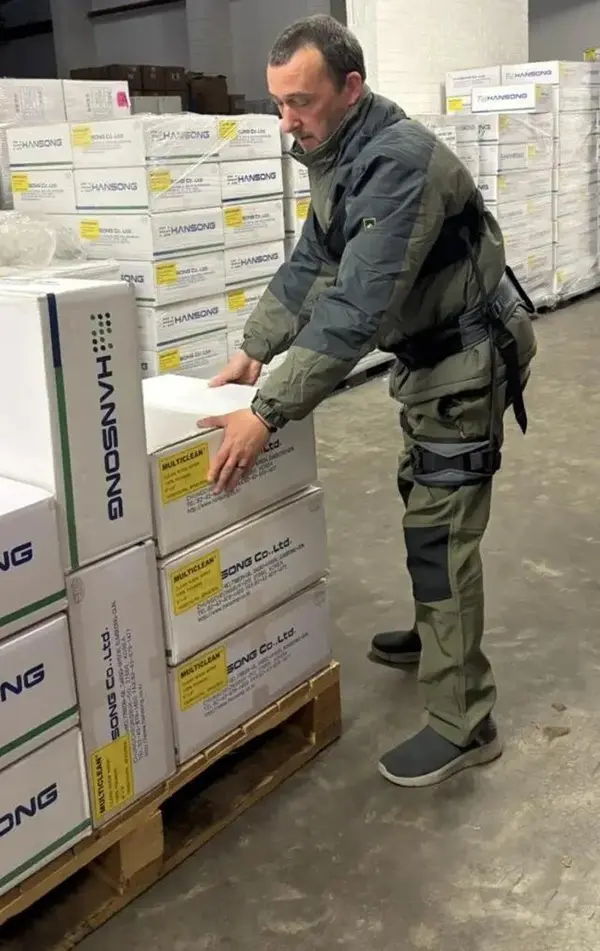
An employee of Lynbond is organizing packages on a pallet.
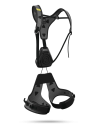
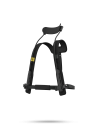
Exoskeleton Hapo CS white version

Positive initial feedback from the teams.

The experimentation of Hapo CS at Lynbond was implemented with the support of Stanley, distributor of Hapo CS in the UK.

In its testimony published by Stanley, the company explains that it has introduced this technology into its warehouse operations to facilitate handling, promote better postures, and reduce fatigue when moving goods.

The initial impressions gathered from the teams are positive.

Lynbond, however, specifies that this experimentation is still ongoing. The company plans to continue gathering feedback from its employees over the coming months to better assess the long-term benefits.

At this stage, no quantified results regarding the reduction of fatigue, pain, or MSDs have been communicated.

This gradual approach allows for confronting the expected benefits of the exoskeleton with the reality of working conditions.

Hapo CS, a solution to consider for the handling professions

Passive exoskeletons are a complementary solution to traditional prevention measures for MSDs: workstation adjustments, use of mechanical aids, reduction of manual handling, and work organization.

Hapo CS is particularly designed for situations involving back strain, especially during repeated bending and straightening movements. Its use can be studied in various professional environments, including logistics, industry, and certain handling activities.

Before any deployment, an ergonomic analysis of the workstation is essential to identify needs and ensure that the assistance provided matches the actual movements performed.

An encouraging trial for warehouse injury prevention

Through this initiative, Lynbond illustrates how companies can integrate physical assistance solutions into their prevention approach.

The initial positive feedback is an encouraging signal, even though the evaluation must continue to determine the long-term benefits.

Experience also shows the importance of support, training, and employee involvement in the deployment of an exoskeleton.

Contact one of our experts.

Our teams are at your disposal to assess your needs and organize real-life tests to allow your employees to experience the benefits of exoskeletons in their work environment.

Contact one of our experts.

Our teams are at your disposal to assess your needs and organize real-life tests to allow your employees to experience the benefits of exoskeletons Hapo in their work environment.