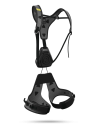
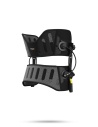
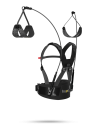
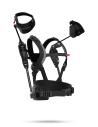
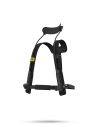
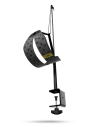
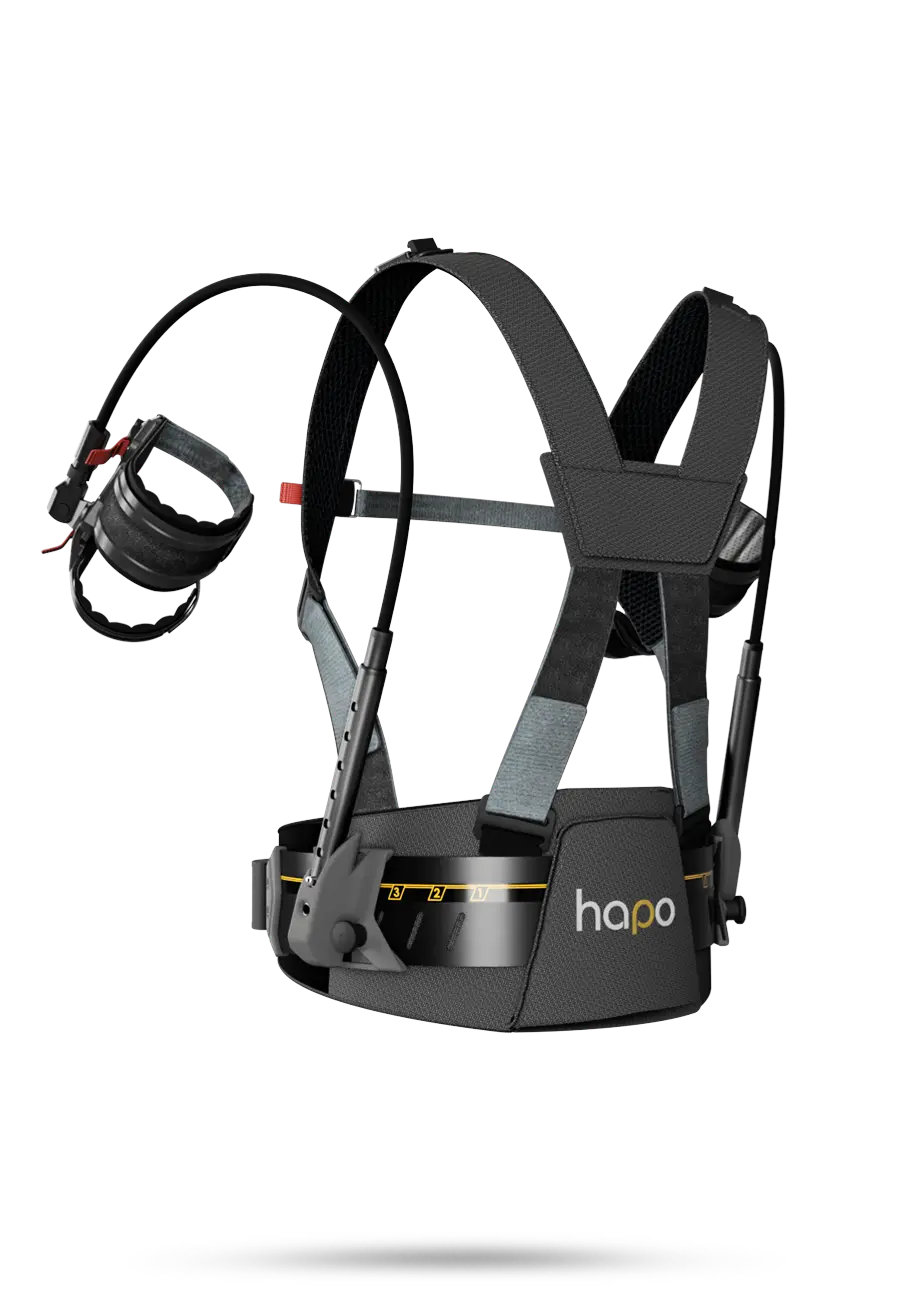
The equipment arrives at the beginning of summer 2025 and is deployed in the fall. Two pairs of exoskeletons are put into service in Sévenans and Belfort:
- One is designed to provide back support and load-carrying assistance for supply and dishwashing staff.
- The other is designed to relieve arm and shoulder strain for service staff (Hapo FRONT model shown opposite).
Quick to put on (less than two minutes), exoskeletons adapt to the user's body shape thanks to several sizes for the upper torso. These devices are called passive because they are not motorized. Made from fiberglass springs, they are lighter, allow for fluid movements, and are generally better accepted by personnel.
These exoskeletons reduce muscle activity by 15 to 20%, thus helping to decrease fatigue, the risk of musculoskeletal disorders, and ultimately, sick leave. "The goal is not to augment the human, but to preserve it," summarizes Bérenger Le Tellier, PhD in biomechanics and head of exoskeleton development.