The 9 principles of prevention

How Hapo responds to it

The 9 principles of prevention

How Hapo responds to it

The 9 prevention principles, also known as general prevention principles, are defined by Article L4121-2 of the Labor Code. They form the foundation of any occupational health and safety approach and guide employers in the prevention of occupational risks.

What are the 9 principles of prevention?

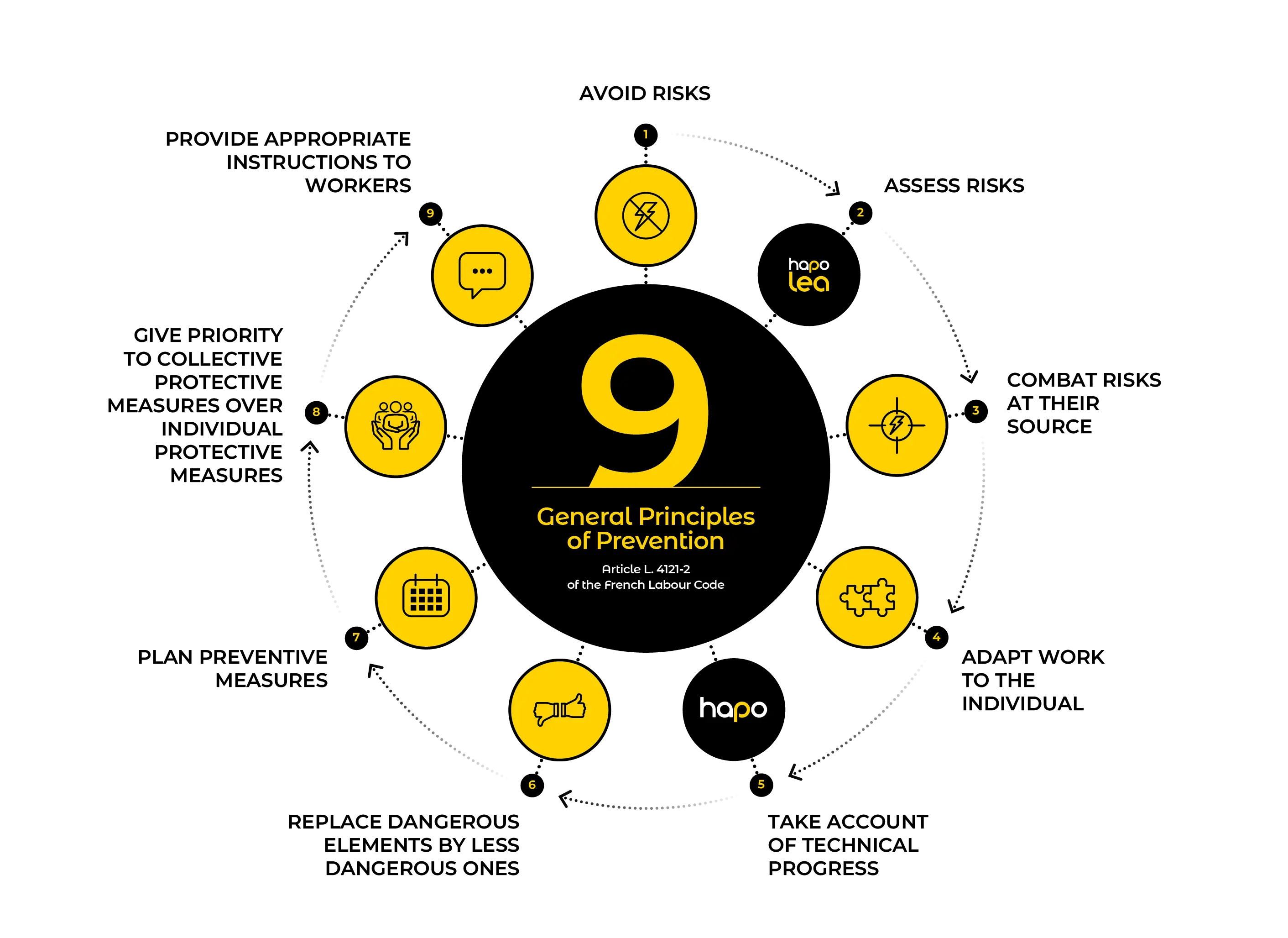
  1. Avoid risks

  2. Evaluate risks that cannot be avoided

  3. Combat risks at the source

  4. Adapt work to the individual

  5. Consider the evolution of technology

  6. Replace what is dangerous with something less dangerous

  7. Plan prevention

  8. Prioritize collective protection

  9. Provide appropriate instructions to workers
The 9 prevention principles of the Labor Code explained by Hapo

This infographic presents the 9 general principles of prevention defined by the Labor Code. These prevention principles serve as the reference framework for identifying, assessing, and reducing occupational risks in all sectors of activity. From risk assessment to collective protection, they help structure an effective and sustainable prevention approach.

These principles aim to help employers prevent occupational risks, protect employees' health, and sustainably improve working conditions.

But how can these principles be practically applied in the field? And what solutions can help companies implement them effectively?

Discover the 9 prevention principles and how Hapo supports organizations in this approach.

1. Avoid risks

The first principle of prevention is to eliminate the risk before it even appears.

The more a hazard is eliminated upstream, the less necessary it will be to implement corrective measures later on.

Concrete example:

In a food processing plant, operators regularly have to climb a step ladder to access a control located at a height. During a reorganization of the production line, the controls are repositioned at eye level.

The risk of falling disappears completely.

2. Evaluate the risks that cannot be avoided

When the risk cannot be eliminated, it must be assessed to measure its frequency, potential severity, and the populations exposed.

This assessment forms the basis of any prevention strategy.

Concrete example:

With Hapo LEA, its AI-assisted postural analysis solution, Hapo automatically identifies risky postures and situations likely to cause musculoskeletal disorders (MSDs).

Companies thus have objective data to assess risks and prioritize their prevention actions.

Discover the Hapo LEA application

3. Combat the risk at the source

This principle involves acting directly on the source of the danger rather than on its consequences.

Prevention is all the more effective when it addresses the risk as close to the source as possible.

Concrete example

In a metallurgy workshop, several employees report frequent cuts when handling machined parts.

Analysis reveals that the metal burrs come from a machine setting defect.

By correcting the manufacturing process, the risk is eliminated at the source.

4. Adapt work to the person

The work must be designed according to the physical and cognitive abilities of the employees, not the other way around.

This principle aims in particular to reduce hardship, fatigue, and musculoskeletal disorders.

Concrete example

In a logistics center, the heaviest packages are systematically placed on the lower levels of the shelves.

After an ergonomic study, the organization is revised so that the most handled loads are stored between knee and shoulder height.

Physical constraints are thus greatly reduced.

5. Take into account the evolution of technology

Technological innovations regularly offer new possibilities to improve safety and preserve the health of employees.

Companies must integrate these advancements when they help reduce risks.

Concrete example:

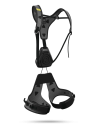
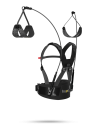
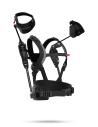
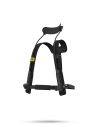
Hapo develops an innovative range of exoskeletons designed to reduce biomechanical constraints and prevent the onset of musculoskeletal disorders.

These solutions help support operators in their daily tasks while preserving their long-term health.

Discover Hapo exoskeletons

6. Replace what is dangerous with what is less so.

When a hazard cannot be eliminated, a less risky alternative should be sought.

Concrete example

In an industrial cleaning company, a particularly irritating chemical product is replaced by a solution that offers the same performance while presenting fewer risks to users.

7. Plan prevention

Prevention must be part of a global and coherent approach.

It cannot rely solely on occasional or reactive actions.

Concrete example

An industrial company implements an annual plan that includes safety training, field audits, ergonomic actions, equipment investments, and the monitoring of HSE indicators.

8. Prioritize collective protection

Collective protection measures should always be prioritized over individual protective equipment.

Concrete example

In a maintenance workshop, the installation of a dust extraction system protects all operators present in the work area.

This solution is more effective than simply wearing an individual mask.

9. Give the appropriate instructions to the workers

Even the best preventive measures remain ineffective if employees do not understand the risks they are exposed to.

Information, awareness, and training are therefore essential.

Concrete example

In a transport company, each new arrival follows an integration program that includes modules on movements and postures, road risks, and emergency procedures.

The 9 principles of prevention: much more than a regulatory obligation

The application of the 9 prevention principles should not be considered merely a regulatory obligation. These general prevention principles are a true lever for performance, quality of work life, and control of occupational risks. Thanks to innovative solutions like Hapo LEA and its range of exoskeletons, Hapo supports companies in the concrete implementation of prevention principles on a daily basis.

Contact one of our experts

Our teams are at your disposal to assess your needs and organize real-life tests to allow your employees to experience the benefits of exoskeletons in their work environment.

Contact one of our experts

Our teams are at your disposal to assess your needs and organize real-life tests to allow your employees to experience the benefits of Hapo exoskeletons in their work environment.