Exoskeletons at work: lessons from field experiments published by INRS

Exoskeletons at work: lessons from field experiments published by the INRS

Can professional exoskeletons really reduce physical strain at work? In a report published in September 2026, the INRS gathers several experiments conducted in home care, air transport, logistics, and agriculture. These feedbacks, which also involve Hapo exoskeletons, help to better understand their benefits, limitations, and the conditions necessary for their adoption.

Home care: encouraging results

Between 2021 and 2025, the Auxi'life network participated in a project to evaluate exoskeletons designed for home care professionals in order to reduce their physical load. The models Hapo BACK and Hapo FRONT were among the devices studied, alongside a competing exoskeleton.

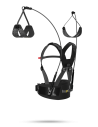
The results obtained with Hapo FRONT, designed to assist postures that require the arms to be extended forward, are particularly interesting.

In the laboratory, researchers measured:

  • 9.7% reduction in deltoid muscle activity;
  • 5.6% reduction in overall muscle activity of the studied muscle groups;
  • 19% reduction in perceived effort.

In real conditions, deltoid muscle activity decreased by 18 to 48% among the four users analyzed.

These results illustrate the potential of targeted assistance for certain tasks, particularly those requiring the arms to be held forward.

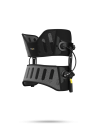
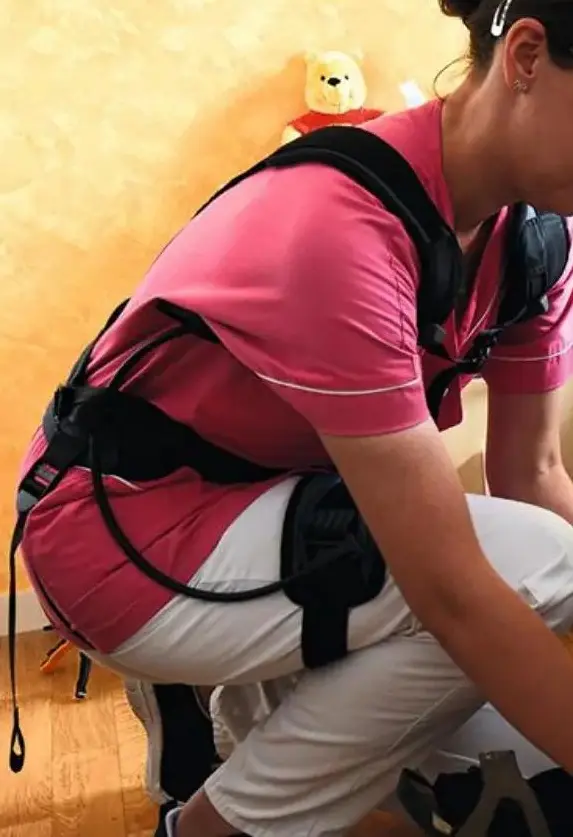
The evaluation of Hapo BACK (shown here) also highlighted effects on back muscles, but with variable results depending on the participants.

These observations remind us that an exoskeleton must be evaluated based on the movements performed and the characteristics of each user.

Crouching caregiver

Air France: the importance of a gradual integration

At Air France, five years of experimentation, from 2021 to 2026, have allowed for the structuring of an integration approach for exoskeletons, particularly in baggage handling and aeronautical maintenance.

The main lesson is organizational: the effectiveness of a project does not solely depend on the chosen device.

The company has gradually developed a method that involves ergonomists, prevention specialists, managers, and willing employees.

Analysis of constraints, selection of equipment, field trials, and user monitoring are the main steps of this approach.

Air France's experience thus shows that the adoption of exoskeletons requires genuine support, rather than just providing equipment.

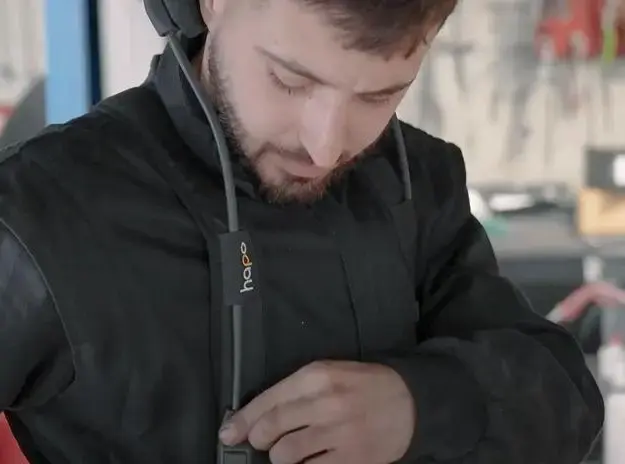
Mechanic putting on his exoskeleton.

La Poste: experiments in the service of prevention and job retention

For several years, La Poste has been experimenting with exoskeletons in various activities: sorting, handling packages, and preparing routes.

Devices Hapo have notably participated in these experiments.

Initially focused on preventing physical strain, the trials have gradually been expanded to certain situations of maintaining or returning to employment.

This feedback highlights the importance of training users, allowing for a adaptation period, and evaluating the equipment in real working conditions.

It also reminds us that the needs differ between a collective prevention approach and the individual support of an employee.

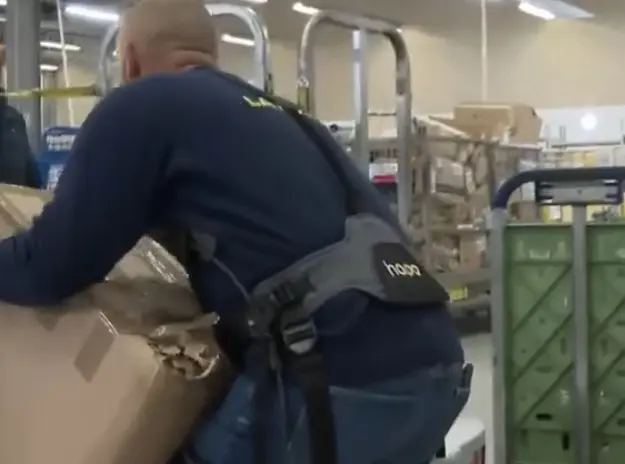
Post employee carrying a large cardboard box.

Agriculture: comfort, a decisive factor

Viticulture, breeding, and agricultural work expose professionals to repetitive movements and sometimes restrictive postures.

The report presents several experiments supported by the network of the Agricultural Social Mutuality (MSA). Hapo devices have also been tested in this sector.

These studies show that acceptance of exoskeletons varies greatly among users.

In one of the studies presented, nearly a third of participants did not retain any of the proposed devices.

Researchers also emphasize that comfort is one of the main criteria for adoption and that a few days of use are not always sufficient to properly assess a piece of equipment.

These observations confirm the importance of trials that are long enough and adapted to the realities of each profession.

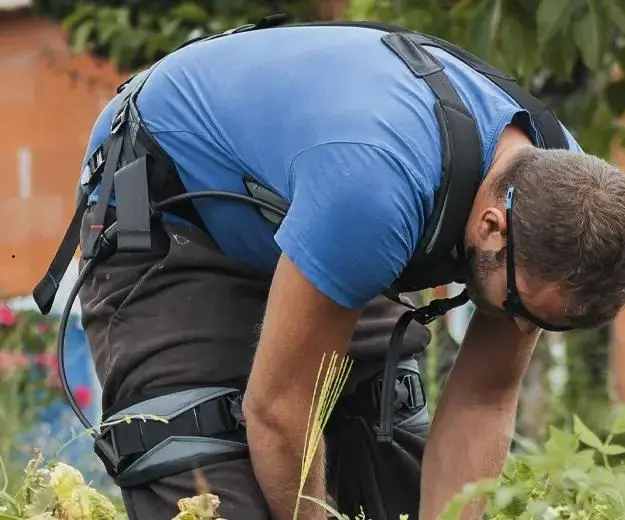
Farmer leaning forward harvesting vegetables.

What lessons can be learned for businesses?

Despite the diversity of the sectors studied, the experiments highlight several common principles:

  • Identify suitable tasks: an exoskeleton must meet specific physical constraints.
  • Involve users: their feedback is essential to assess comfort and freedom of movement.
  • Prioritize real-world testing: performance measured in the lab is not enough to ensure satisfactory use.
  • Support integration: training, adjustments, and monitoring promote appropriate use.
  • Maintain a comprehensive prevention approach: the exoskeleton complements technical and organizational measures, without replacing them.

Identify suitable tasks: an exoskeleton must meet specific physical constraints.

Involve users: their feedback is essential for assessing comfort and freedom of movement.

Prioritize real-world testing: performance measured in the laboratory is not enough to ensure satisfactory use.

Support the integration: training, adjustments, and monitoring promote appropriate use.

Maintain a comprehensive prevention approach: the exoskeleton complements technical and organizational measures, without replacing them.

The results of the study show that exoskeletons can reduce certain muscular demands. However, they do not, on their own, allow for a conclusion regarding a decrease in musculoskeletal disorders (MSDs) in the long term.

Conclusion: adapt the exoskeleton to the work, not the other way around.

The experiments presented by INRS provide a valuable insight into the use of professional exoskeletons.

The results obtained with Hapo FRONT in home assistance demonstrate that targeted physical assistance can reduce certain muscular strains under the studied conditions.

The experiences of Air France, La Poste, and the agricultural sector show that the success of a project relies on an analysis of actual work, user involvement, and appropriate support.

The challenge is therefore not to find a universal exoskeleton, but to identify the most relevant solution for each professional situation.

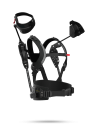
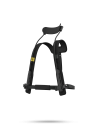
The passive exoskeletons Hapo fit into this approach, with different models designed to support the demands on the back, shoulders, and arms.

Do you want to evaluate an exoskeleton in your company? Discover the Hapo solutions and contact our team to arrange a trial tailored to your activities.


Source: INRS, file "Exoskeletons: Prevention Questions," Hygiene & Occupational Safety, no. 284, September 2026.

Contact one of our experts.

Our teams are at your disposal to assess your needs and organize real-life tests to allow your employees to experience the benefits of exoskeletons in their work environment.

Contact one of our experts.

Our teams are at your disposal to assess your needs and organize real-life tests to allow your employees to experience the benefits of exoskeletons Hapo in their work environment.