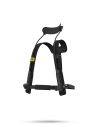
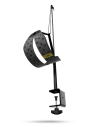
Industrial exoskeletons represent a major innovation for preserving the performance and safety of workers in demanding environments.
Used in industry, agriculture, logistics, and transportation, these mechanical devices aim to reduce fatigue and prevent pain and injuries related to repetitive movements, strenuous postures, and handling.
There are sometimes reluctances (lack of knowledge, discomfort, fear of change). The integration method therefore plays a key role: information, supervised trial, individual adjustments, and follow-up.
In this dossier, you will find:

Passive exoskeletons Hapo use a mechanical spring-rod technology that is simple, robust, and intuitive,
limiting the risk of breakdowns and maintenance needs.
In summary, Hapo exoskeletons provide a sustainable solution
to maintain the performance and well-being of teams in environments with high physical constraints.

The price of an exoskeleton for the industry varies from €534 to €3,500 depending on the model and the area of assistance.
This price should be put into perspective with:
Work stoppages avoided
Pain and body wear are major causes of absenteeism. By helping to prevent these risks, exoskeletons contribute to reducing stoppages and associated costs.
Job retention
Experienced seniors but physically more fragile, or people recognized as RQTH (Recognition of the Quality of Disabled Worker)
The stabilization
of teams
Decrease in turnover, satisfaction, and sense of recognition among employees who are more inclined to remain loyal to the company
The Hapo exoskeletons find their place in all industrial activities
where repetitive movements, awkward postures, and load carrying are encountered.

"less physical fatigue in the shoulders since using"

"I am satisfied, it is truly a great relief. Before, I had severe lower back pain…"

"the goal is to improve working conditions and reduce musculoskeletal disorders"
In less than 5 minutes, complete an assessment of your situation and discover our recommendations
and the Hapo exoskeleton that suits your needs.
At Hapo, we support each project according to the AFNOR NF X35-800 standard
(ergonomic recommendations for physical assistance devices)
1 Conduct an ergonomic assessment with the help of a specialist to identify the repetitive or risky movements actually involved
2 Choose a model suited to the sector, the task, and the morphology
3 Organize a field test phase (1 to 2 weeks)
4 Involve end users from the beginning of the process
5 Offer simple and quick training for use
6 Measure the results (pain, fatigue, acceptance, productivity)
7 Plan regular follow-up and a point of contact (prevention officer, HR, QWL manager)
✘ Does not replace primary prevention or PPE
✘ Gain not guaranteed on all tasks without trial or adjustment
✔ Relieves on targeted and repetitive tasks
✔ Improves posture and perceived comfort
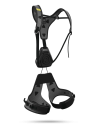
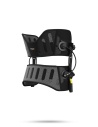
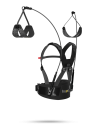
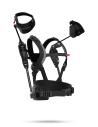
HAPO has developed a complete range of mechanical exoskeletons to provide targeted solutions in reducing postural risk factors and the risk of body wear in the industrial environment. To maximize their effectiveness while respecting the body's natural movements, each exoskeleton targets specific postures and specific areas of the body.
The Hapo exoskeletons help to reduce body wear, preserve safety, and maintain performance in demanding environments.
The key: a rigorous method of integration and the involvement of the teams.
Lack of knowledge, perceived discomfort, or fear of losing autonomy. Training and gradual adaptation can overcome these barriers.
Analyze movements, repetitiveness, ranges, and stressed areas; consider the duration and intensity of efforts to choose the appropriate exoskeleton.
Reduction in fatigue and body wear, better endurance on targeted tasks — thus increased safety and performance.
Measurements before/after (perceived pain/fatigue, acceptance, cycle time) + monitoring of sick leave and turnover; regular adjustments.